Unlock a world of possibilities! Login now and discover the exclusive benefits awaiting you.

- Qlik Community
- :
- Forums
- :
- Analytics & AI
- :
- Products & Topics
- :
- Visualization and Usability
- :
- Re: Expression doesn't work (
- Subscribe to RSS Feed
- Mark Topic as New
- Mark Topic as Read
- Float this Topic for Current User
- Bookmark
- Subscribe
- Mute
- Printer Friendly Page

 Vasiliy_Beshent
- Mark as New
- Bookmark
- Subscribe
- Mute
- Subscribe to RSS Feed
- Permalink
- Report Inappropriate Content
Expression doesn't work (
Hello, again, friends!
Yesterday i ask you to (Help with expression)
I simplified condition - now i need to take sum of sales on this: BVRPBEDVTZ >= VTRBEGDVTR + 1 year.
And now it looks like this:
Sum(
{<
t35PRDWAER = {'RUB'},
BVRPBEDVTZ = {>=$(AddYears(VTRBEGDVTR,1))}
>}
DECNRPRDEC)
But it still doesn't work  , AddYears() function is become gray in code
Please, someone help me 
Example in attach
Accepted Solutions
Vasiliy_Beshent- Mark as New
- Bookmark
- Subscribe
- Mute
- Subscribe to RSS Feed
- Permalink
- Report Inappropriate Content
i decided to make new field Flag which contains when payment make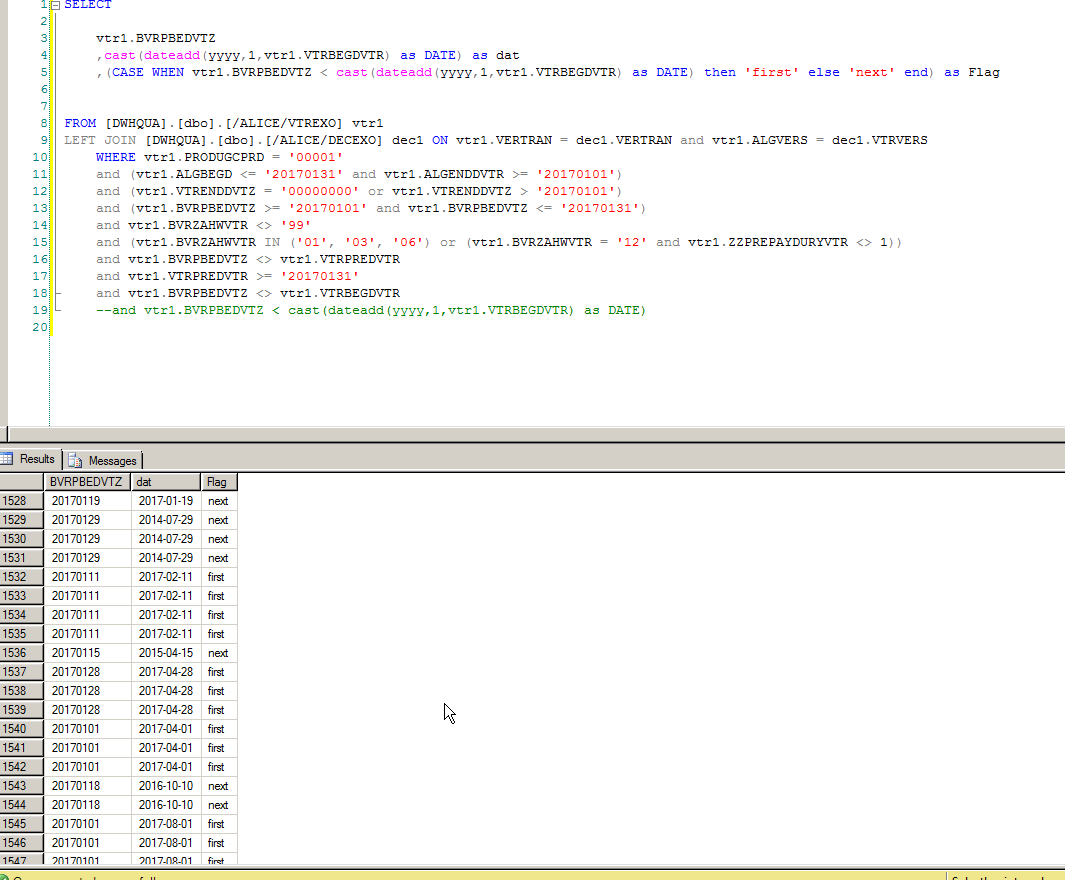
so now i need to thing how to divide this two sum(sales) into 2 KPI in qlik sense: first year payments and next years
upd: and i find the decision
i use
1. Sum({<t35PRDWAER = {'RUB'}, FlagYearPayment = {'next'}>} DECNRPRDEC) for next years payments
2. Sum({<t35PRDWAER = {'RUB'}, FlagYearPayment = {'first'}>} DECNRPRDEC) for first year payments
still search for decision un expressions in qlik sense...

 marcohadiyanto
- Mark as New
- Bookmark
- Subscribe
- Mute
- Subscribe to RSS Feed
- Permalink
- Report Inappropriate Content
Hi Vasiliy,
I think you should add your script to compare BVRPBEDVTZ and VTRBEGDVTR then you can add it to your set analysis.
If you want to get result
Sum(
{<
t35PRDWAER = {'RUB'},
BVRPBEDVTZ = {>=$(Date(AddYears(max(VTRBEGDVTR),1),'YYYY-MM-DD'))}
>}
DECNRPRDEC)
The value of your set analysis won't return 1 single value so BVRPBEDVTZ return nothing, that's why i adding max so i get 1 single value.
Regards,
Marco
Vasiliy_Beshent- Mark as New
- Bookmark
- Subscribe
- Mute
- Subscribe to RSS Feed
- Permalink
- Report Inappropriate Content
sure i compare this dates now is ssms 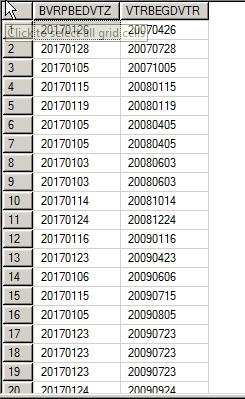
Vasiliy_Beshent- Mark as New
- Bookmark
- Subscribe
- Mute
- Subscribe to RSS Feed
- Permalink
- Report Inappropriate Content
i decided to make new field Flag which contains when payment make
so now i need to thing how to divide this two sum(sales) into 2 KPI in qlik sense: first year payments and next years
upd: and i find the decision
i use
1. Sum({<t35PRDWAER = {'RUB'}, FlagYearPayment = {'next'}>} DECNRPRDEC) for next years payments
2. Sum({<t35PRDWAER = {'RUB'}, FlagYearPayment = {'first'}>} DECNRPRDEC) for first year payments
still search for decision un expressions in qlik sense...
Vasiliy_Beshent- Mark as New
- Bookmark
- Subscribe
- Mute
- Subscribe to RSS Feed
- Permalink
- Report Inappropriate Content
Hey, Marco! Youк thoughts about compare this 2 fields with dates hepls me to find the right solution! Cheers! 

marcohadiyanto
- Mark as New
- Bookmark
- Subscribe
- Mute
- Subscribe to RSS Feed
- Permalink
- Report Inappropriate Content
Hi Vasiliy,
Cheers!
It's better to compare on script level and it's easier rather than we search how set analysis works.
Regards
Marco
