Unlock a world of possibilities! Login now and discover the exclusive benefits awaiting you.

Product Innovation
By reading the Product Innovation blog, you will learn about what's new across all of the products in our growing Qlik product portfolio.
Support Updates
The Support Updates blog delivers important and useful Qlik Support information about end-of-product support, new service releases, and general support topics.
Qlik Academic Program
This blog was created for professors and students using Qlik within academia.
Community News
Hear it from your Community Managers! The Community News blog provides updates about the Qlik Community Platform and other news and important announcements.
Qlik Digest
The Qlik Digest is your essential monthly low-down of the need-to-know product updates, events, and resources from Qlik.
Qlik Learning
The Qlik Learning blog offers information about the latest updates to our courses and programs, as well as insights from the Qlik Learning team.
Recent Blog Posts
-
Tabular Reporting within Qlik Cloud Analytics
The subtle yet significant addition of Tabular Reporting, one of the most requested features, is finally here. -
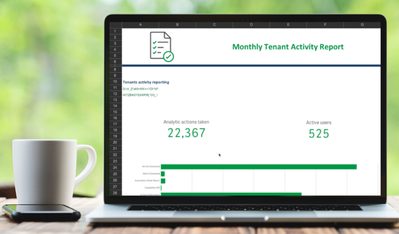
6 Things You Might Not Know About Qlik-cli
Qlik-cli is a great tool to use for automating tasks or making scripting easier, in this blog post I will share 6 cool things you might not know about Qlik-cli. -
Athletics Injuries Analysis
Athletics Injuries Analysis Lupus Analitycs Uncover global patterns in athletics injuries - 15,000 cases mapped across countries ,events and body parts. Discoveries The most common injuries in athletes is the Achiiles tendon Impact Which Injuries are most common Audience All intrested in sport Data and advanced analytics Discovery of potential risks. -
【オンデマンド配信】銀行業界向けデータ活用の課題と Qlik による高度化
日本の銀行業界は、金融政策の転換や人口減少、フィンテック企業との競争激化といった構造的な変革期にあります。本 Web セミナーでは、これらの課題を乗り越えるための IT 戦略に焦点を当てます。具体的には、レガシーシステムの老朽化からの脱却、デジタルチャネルの最適化、サイバーセキュリティ対策、そして DX 人材の不足といった重要課題を整理します。特に、顧客接点や取引履歴、音声ログなどの非構造化データを活用しきれていない現状に対し、Qlik の ソリューションは、データを統合・分析し、生成 AI とも連携することで、パーソナライズされた提案やリスク予測の高度化を実現します。これにより、銀行は顧客体験の刷新や新たな収益モデルの構築を推進することができます。 ※ パソコン・タブレット・スマートフォンで、どこからでもご視聴いただけます。今すぐ視聴する 今すぐ視聴する -
On Demand App Generation - Sooooooo much easier to implement! (VIDEO and samples...
Let's face it - it usually takes a bit longer for features and capabilities of any product to gain traction in an organization. We released On Demand App Generation in 2018 with our Qlik Sense client-managed edition. Frankly I don't have much insight into whom has or has not implemented it. BUT, I can tell you from those that I have spoken with over the years, many were surprised to even see this awesome feature in the product when I brought it... Show MoreLet's face it - it usually takes a bit longer for features and capabilities of any product to gain traction in an organization. We released On Demand App Generation in 2018 with our Qlik Sense client-managed edition. Frankly I don't have much insight into whom has or has not implemented it. BUT, I can tell you from those that I have spoken with over the years, many were surprised to even see this awesome feature in the product when I brought it up.
However, in older versions, in order to enable it - there were a number of requirements which involved copying data load script along with inserting bindings and variables - which at first glance could be perceived as cumbersome. Even the first time I worked with it, I was a bit overwhelmed. This was true for others as well, so much so, that some Qlik enthusiast even developed web app add-ons and extensions to simplify the process and generate the template for you.BUT....... since the release of ODAG, just like anything else, it has evolved and is now extremely simple to enable and implement. I show you this process in my latest Do More with Qlik (archive link below) session and summarize the ODAG concept in the latest Qlik Sense in 60 video embedded in this post - so please be sure to check them out. Let me know what you think in the comments below. Stay tuned to my next post where I build on what we learned about ODAG to introduce you to Dynamic Views!
On Demand App Generation - (ODAG - concept)
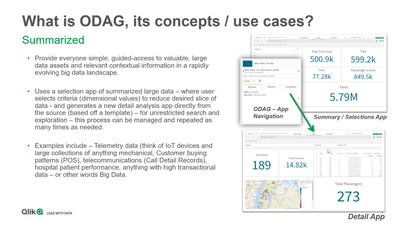
In summary, ODAG was originally developed to meet the need of analysis of very large data sets. The concept is quite simple:
- One Qlik Sense app displays summarized data with filters from the big data source.
- You select the filter values and reduce your answer set to meet a defined row count constraint.
- You click the app navigation link along the bottom to open the ODAG panel
- You click a button and a new more detailed app, dynamically built from a template, is generated directly from the source data with applied filters and defined metrics at a much more detailed level. That's it!
ODAG Requirements Summarized
- Qlik Sense base app (contains summarized measures as KPIS and desired dimension values as filters)
- Summarized data
- App Navigation link - linked to 2nd Qlik Sense template app
- Defined row count constraint
- App retention setting
- Qlik Sense template app (contains detail KPIs and detailed analysis metrics)
- Activation script with binding syntax
- WHERE conditions with odag_ binding variables added to query
Qlik Sense in 60 - On Demand App Generation (video)
(Video transcript attached)
Help Topics
Source data:
https://www1.nyc.gov/site/tlc/about/tlc-trip-record-data.page
Presentation:
Do More with Qlik Session - you may need to register to access it:
https://gateway.on24.com/wcc/experience/eliteqliktech/1910644/2395144/do-more-with-qlik-for-beginners-and-beyond
Register:https://pages.qlik.com/21Q3_QDEV_DA_GBL_DoMorewithQlikTargetpage_Registration-LP.html
Sample Apps attached - ODAG - Apps - Taxi Trips.zip - (Note you need to add your data connection and access SQL etc to your data sources)
Can't see the video? YouTube blocked by your region or organization? Download the .mp4 attached in this post to view this on your computer or mobile device.

-
【開催報告】Data Design Duel – 第 5 回 Qlik データソン
今年も熱い戦いとなった Data Design Duel – 第 5 回 Qlik データソンを開催しました。デザインのみで勝負する “Qlik で競うダッシュボードの美学”というテーマに、109 名(89 組)のアプリ開発者が挑戦!約 1 ヶ月という期間で、個性あふれるデザインの Qlik Sense アプリを提出いただきました。 去る 8/7(木)、東京のとある会場でアワード授賞式を開催。101 名(会場およびオンライン)にご参加いただき、挑戦者・授賞式の参加者ともに、史上最大規模のデータソンとなりました。会場では、提出いただいた全 58 のアプリを動画再生でご紹介しました。 -
Can just a few hours of student activity predict the future?
Stanford University researchers say yes. At the Learning Analytics and Knowledge Conference (LAK ’25), they revealed that looking at just two to five hours of student activity in intelligent tutoring systems or educational games can predict, months in advance, how those students will perform on end-of-year standardized tests. Data from intelligent tutors helps predict K-12 academic outcomes, study finds | Stanford Report Researchers analyzed only... Show MoreStanford University researchers say yes.
At the Learning Analytics and Knowledge Conference (LAK ’25), they revealed that looking at just two to five hours of student activity in intelligent tutoring systems or educational games can predict, months in advance, how those students will perform on end-of-year standardized tests. Data from intelligent tutors helps predict K-12 academic outcomes, study finds | Stanford Report
Researchers analyzed only the early interaction logs and used machine learning to spot patterns. The surprise? These short-term models were just as accurate as those built from an entire year of data.
As Professor Emma Brunskill from Stanford explains:
“In education, we often are interested in delayed outcomes like end-of-the-year assessments, but it would be useful if we could predict those outcomes using shorter amounts of data from educational software platforms.”This shows you don’t need massive datasets to uncover valuable insights, you need the skills to interpret them. Early predictions like this allow teachers to act sooner, whether that means offering extra help or providing greater challenges.
That’s where data literacy comes in. When you know how to explore and interpret data, you can spot patterns early, act with precision, and track results over time.
The Qlik Academic Program helps make that possible, offering free access to Qlik Sense analytics software, self-paced training, certifications, and resources to apply insights ethically and effectively.
Ready to explore your own data?
Join for free: www.qlik.com/academicprogram
-
Community Manager Appreciation Day 2025!
Today is Community Manager Appreciation Day, and we want to take a moment to express our heartfelt gratitude to the incredible Community managers and moderators who work tirelessly to make our Qlik Community a welcoming, engaging, and valuable resource for all. Our Community managers wear many hats - they are mentors, problem-solvers, connectors, and champions of collaboration. Every day, they: Ensure our community remains a positive and support... Show MoreToday is Community Manager Appreciation Day, and we want to take a moment to express our heartfelt gratitude to the incredible Community managers and moderators who work tirelessly to make our Qlik Community a welcoming, engaging, and valuable resource for all.
Our Community managers wear many hats - they are mentors, problem-solvers, connectors, and champions of collaboration. Every day, they:
- Ensure our community remains a positive and supportive environment for learning and sharing
- Facilitate meaningful discussions and knowledge exchange
- Connect members with the resources and expertise they need
- Champion your feedback and ideas to improve our Community continuously
- Foster an inclusive space where everyone's voice matters
These dedicated individuals work behind the scenes to maintain the high standards of our Community while creating opportunities for meaningful engagement and growth. Their commitment to supporting your analytics, data integration, AI journey and fostering connections between members has been instrumental in building the thriving Community we all enjoy today.
We invite you to join us in celebrating our Community Managers and Moderators. Feel free to share your appreciation or a positive experience you've had in the comments below. Your kind words mean the world to them!
Thank you to our amazing Community Managers and Moderators for their unwavering dedication to making the Qlik Community a place we're all proud to be part of. @SarahUrbiss @Jamie_Gregory @nicole_ulloa @Melissa_Potvin @calebjlee @Tammy_Milsom
-
Qlik Automate: Changes to error handling for Qlik Reporting connector
Hello Qlik Automate administrators and users, Based on feedback, Qlik has changed the way errors are handled in the Qlik Reporting connector for Qlik Automate. The change was rolled out on August 12th, 2025. The following blocks will be replaced to facilitate the changes: Get Chart Image Get Pixel Perfect Report Get Tabular Report The functional change of the new blocks centers on error handling. While the old blocks output a simple failed stri... Show MoreHello Qlik Automate administrators and users,
Based on feedback, Qlik has changed the way errors are handled in the Qlik Reporting connector for Qlik Automate. The change was rolled out on August 12th, 2025.
The following blocks will be replaced to facilitate the changes:
- Get Chart Image
- Get Pixel Perfect Report
- Get Tabular Report
The functional change of the new blocks centers on error handling. While the old blocks output a simple failed string in case of an error, we wanted to update this output to include the full error object, including the status code and reason.
Additionally, in certain situations, the old blocks would have a successful run even though the output is an error; we updated this behavior so the new blocks will error out in any situation involving an error.
What does this mean for me?
The old blocks were renamed, flagging them as deprecated. Example: Get Chart Image (deprecated)
The new blocks retain the old names and are referenced in the description of the old blocks.
The action needed by Qlik Automate administrators and users is to switch from the (deprecated) blocks to the new ones.
If you have any questions, we're happy to assist. Reply to this blog post or take similar queries to the Qlik Application Automation forum.
Thank you for choosing Qlik,
Qlik Support -
【10/28(火)13:00 開催】Qlik AI Reality Tour Tokyo 2025:Do Data Differently - データで常識を超...
Do Data Differently - データで常識を超える変革を - 来たる 10/28(火)、 The AI Reality Tour Tokyo 2025 を開催します。 AI の普及が急速に進み、誰もが AI のパワーを活用するようになりました。AI は、あれば便利なものではなく、今日のビジネスに欠かせないテクノロジーとなり、AI を効果的に導入・活用しない企業は後れをとるとも言われています。 なぜ、AI に Qlik なのか?Qlik は、強力なデータ統合、責任あるガバナンス、独自の分析エンジン、最先端の AI ソリューションで、AI を活用したインサイトの獲得を可能にし、最適な意思決定と行動をサポートします。 本イベントでは、予測 AI・生成 AI・エージェンティック AI を統合した Qlik の最新製品をご紹介する基調講演をはじめ、Qlik のユーザーが語る先進的な事例、Qlik のパートナー企業による最新のテクノロジーやソリューション、展示ブースなど、貴社の AI... Show MoreDo Data Differently - データで常識を超える変革を -
来たる 10/28(火)、 The AI Reality Tour Tokyo 2025 を開催します。
AI の普及が急速に進み、誰もが AI のパワーを活用するようになりました。AI は、あれば便利なものではなく、今日のビジネスに欠かせないテクノロジーとなり、AI を効果的に導入・活用しない企業は後れをとるとも言われています。
なぜ、AI に Qlik なのか?Qlik は、強力なデータ統合、責任あるガバナンス、独自の分析エンジン、最先端の AI ソリューションで、AI を活用したインサイトの獲得を可能にし、最適な意思決定と行動をサポートします。
本イベントでは、予測 AI・生成 AI・エージェンティック AI を統合した Qlik の最新製品をご紹介する基調講演をはじめ、Qlik のユーザーが語る先進的な事例、Qlik のパートナー企業による最新のテクノロジーやソリューション、展示ブースなど、貴社の AI 戦略を成功に導く最新情報をご紹介します。
サッポロホールディングス(株)・松井証券(株)・富士通(株)の登壇決定!詳しい講演概要は近日公開予定です。お申し込みの締め切りは、10月 21日(火)17:00 までです。お早めにお申し込みください。
Qlik 認定資格受験の無料クーポンをプレゼント!本イベントにご参加いただいた方へ、ご希望に応じて Qlik 認定資格を無料で受験いただけるクーポンをプレゼントいたします。お申し込みの際に、ご希望の認定資格をご選択の上、お申し込みください。認定資格の詳細はこちらをご確認ください(英語のみ)。
※ 定員に達し次第、お申し込みを締め切らせていただきます。
※ 定員を上回った場合や競合他社のお申し込みは、参加をお断りする可能性がございますので、予めご了承ください。
※ お席をご用意できた方には、「申し込み完了」メールをお送りします。また、10/27(月)に、配信元 E メールアドレス「noreply@event-planner.net」から入場用 QR コードを E メールでお送りします。
※ プログラムは予告なく変更になる可能性があります。予めご了承ください。
※ 開催報告記事などのための撮影が入る予定です。お姿や資料などが認識できない形での公開に配慮いたしますが、予めご了承ください。【開催概要】
日時:2025年 10月 28日(火)13:00 - 18:00(12:00 受付開始)
懇親会 18:00 - 19:00
会場:神田明神ホール
東京都千代田区外神田2-16-2 神田明神文化交流館2F参加費:無料
お問い合わせ:Marketingjp@qlik.com までお問い合わせください。 -
Introducing a new Script object and Script Editor and more!
What if you could prepare data (join, transform, STORE, etc.) using Qlik script - WITHOUT creating a standalone app - without sheets? Would you like that? Well, would you? Well now you can - introducing our new script object and script editor - with data preview and more! Watch this #qlik #SaaSin60 to learn more! We have now added the ability to create Qlik scripts directly from the hub, ana managed in the catalog - using a new and improved scri... Show MoreWhat if you could prepare data (join, transform, STORE, etc.) using Qlik script - WITHOUT creating a standalone app - without sheets? Would you like that? Well, would you? Well now you can - introducing our new script object and script editor - with data preview and more! Watch this #qlik #SaaSin60 to learn more!
We have now added the ability to create Qlik scripts directly from the hub, ana managed in the catalog - using a new and improved script editor. Users can now build and deploy Qlik scripts upstream of analytics apps, which can be executed and result in output files in formats such as QVD and PARQUET that can be stored in the hub and used for analytics and AutoML applications. The script editor also now includes a data preview feature, allowing users to get better insight when developing scripts. This provides our customers with an improved workflow for preparing data, while setting the stage for future enhancements to analytics data prep capabilities.
- Watch More in 60:
- Can't see the video? YouTube blocked by your region or organization? Watch it here
-
Nike best Models for last 5 years
Nike best Models for last 5 years Lupus Analytics Infocharting o show last 5 years of Nike top selling shoes. Discoveries AIr Max is still the best selling Model Impact Not sure Audience It has been posted on Linked in Data and advanced analytics not sure -
Coming 8/20 to Qlik Learning: My Learning & Up Next Update
We are excited to update Qlik Learning with the newly designed learning experience My Learning. Log into Qlik Learning to see the updated Navigation.
-
Qlik Talend Cloud Introduces Cross Project Pipelines and AI Processor for Snowfl...
Qlik Talend Cloud just got a boost with two exciting new features! First, is the introduction of Cross Project Pipelines, enabling modular design, increased reusability, and better alignment with data mesh principles. Second, the AI Processor in Qlik Talend Cloud now supports Snowflake Cortex AI functions.Read on to learn more... Opens in new window PDF Download Word Download Excel Download PowerPoint Download Document Download ... Show MoreQlik Talend Cloud just got a boost with two exciting new features! First, is the introduction of Cross Project Pipelines, enabling modular design, increased reusability, and better alignment with data mesh principles. Second, the AI Processor in Qlik Talend Cloud now supports Snowflake Cortex AI functions.Read on to learn more...
-
Qlik Academic Program and ICT Academy engagement
Qlik Academic Program and ICT Academy's engagement has been very fruitful over the years. Various initiatives have been undertaken and successfully accomplished, benefitting the academic community in India. -
Ferrari's 7 best models
Ferrari's 7 best models Lupus Analytics Ferraris best models of their cars Discoveries Ferraris has best cars Impact Ferraris F80is the fastest of the all. Audience All users Data and advanced analytics fasfas -
Qlik Automate: Change in Automation Connection permissions for Analytics Admin r...
Hello Qlik Automate admins and users, Previously, it was possible for Analytics Admin to move an existing automation connection to another user’s personal space. This behavior has been deprecated as personal spaces are meant to be private and exclusively managed by the space owner or Tenant Administrators. What does that mean for me? No action is required from your end. When will this change be implemented? The change was implemented today, on Au... Show MoreHello Qlik Automate admins and users,
Previously, it was possible for
Analytics Adminto move an existing automation connection to another user’s personal space. This behavior has been deprecated as personal spaces are meant to be private and exclusively managed by the space owner or Tenant Administrators.What does that mean for me?
No action is required from your end.
When will this change be implemented?
The change was implemented today, on August 7th, 2025.
If you have any questions, we're happy to assist. Reply to this blog post or take similar queries to the Qlik Automate forum.
Thank you for choosing Qlik,
Qlik Support -
Qlik Trust Score for AI: Evolving Data Trust for the Next Era of AI-Ready Data
From trustworthy to AI-ready Data — how Qlik is advancing Trust Score to meet the needs of AI-driven enterprises -
Stitch: Google Ads Major Version Release and sunsetting of Google Ads API versio...
Hello Stitch Admins, Stitch has released a new version of its Google Ads integration. With this release comes an update to Google Ads V2, which utilizes the latest Google Ads API (version 20). The previously used Google Ads API version 18 will be sunset by Google on August 20th, 2025. Once the API is sunset, integrations that interact with it will stop working. What do I need to do? Create a new integration to stay ahead of Google sunsetting ver... Show MoreHello Stitch Admins,
Stitch has released a new version of its Google Ads integration. With this release comes an update to Google Ads V2, which utilizes the latest Google Ads API (version 20).
The previously used Google Ads API version 18 will be sunset by Google on August 20th, 2025. Once the API is sunset, integrations that interact with it will stop working.
What do I need to do?
Create a new integration to stay ahead of Google sunsetting version 18. We've put together a general guide to assist you.
Using a new schema name
If you are creating a new integration and don't plan on reusing the previous schema name, you can go ahead and make a new Google Ads integration. Selecting Google Ads from the integration options will default to the latest version, in this case, V2. The new integration will also benefit from the 7-day free historic sync.
Re-using the schema name
If you need to use the same schema name for the new integration, you must do the following:
- Pause the existing integration(s) in your Stitch account.
- Wait for any records that are being prepared to finish loading (such as waiting for Preparing to reflect 0 rows in the integration summary page).
- Take note of the tables and fields tracked for replication, as well as the replication methods defined for these tables.
- Delete the existing integration from your Stitch account.
- Drop or rename the existing schema from your destination data warehouse. We recommend renaming the schema to preserve the data and maintain flexibility to adjust downstream workflows.
- Contact Qlik Support to coordinate a manual row-usage exemption for this integration.
- Configure a new integration with the same name, and Stitch will create this schema in your destination during the loading process.
Frequently Asked Questions
Q: Can I copy over my bookmarks to the new integration?
A: Bookmarks cannot be covered over. When you create a new integration, every table will perform a full table replication from the start date set in the settings. Once the historic sync is complete, it will move to the selected replication method. There is no mechanism to manually set bookmarks, and individual integrations have no interaction with each other, even in upgrades.Q: What if I need more than 7 days to complete the historic sync?
A: Reach out to Qlik Support for a manual exemption. Please explain why you need more time, and we will accommodate accordingly.Q: Will the data structure be the same in the new integration?
A: We cannot guarantee the data structure is the same as it is determined by Google Ads API. If you are looking for field or table changes, please reference the Google Ads API comparison guides (Upgrade from v18 to v19 and Upgrade from v19 to v20). If you are missing data, reference Google's documentation to confirm it hasn't moved or been removed. In the event Google says data should exist, but it is not replicated, raise a ticket to Qlik Support to review and investigate.If you have any questions, we're happy to assist. Contact Support, reply to this blog post, or take similar queries to the Stitch forum. And if you want to stay up to date for Stitch-specific Support Updates, don't forget to subscribe!
Thank you for choosing Qlik,
Qlik Support -
Legacy Qlik Analytics Connectors for Amazon S3 to be deprecated in 2025
Update October 6th, 2025: Added possible migration challenge for ListBuckets. In an effort to give customers the necessary time to carry out the migration, Qlik has delayed the removal of our legacy S3 connectors. See the updated dates below.Please proceed with the migration as soon as possible as no further extension will be possible. The following connectors will be removed and are not recommended for further use: Amazon S3 Metadata Amazon S3:... Show MoreUpdate October 6th, 2025: Added possible migration challenge for ListBuckets.
In an effort to give customers the necessary time to carry out the migration, Qlik has delayed the removal of our legacy S3 connectors. See the updated dates below.
Please proceed with the migration as soon as possible as no further extension will be possible.The following connectors will be removed and are not recommended for further use:
- Amazon S3 Metadata
- Amazon S3: this is a “File location” connector
Instead, use the following connectors:
- Amazon S3 Metadata V2
- Amazon S3 V2: this is a “File location” connector
The connectors labeled with the suffix “V2” were introduced in 2022 and have since then been the recommended connectors for access to Amazon S3 buckets.
The V2 connectors access Amazon S3 buckets based on the AWS SDK for .NET Core, whereas the legacy S3 connectors were based on the REST API.
The plans to remove the legacy S3 connectors are as follows:
- Qlik Sense Cloud: by the end of August 2025
- Qlik Sense Enterprise on Windows: release November 2025
- Qlik Web Connector (standalone): release June 2025
The legacy S3 connectors and the S3 connectors “V2” have the exact same capabilities, and a migration will in most cases only require a new connection definition and an update in the connection name within the Qlik Script.
The only exception is with the Amazon S3 Metadata connector when the ListBuckets table is used, which may require additional attention. A field name is changed in this table: CreationDate, removing the underscore (_) previously present in the legacy connector (old: Creation_Date).
For this case, the suggestion is to only change the field reference in the initial select statement, but not the alias, so that further references used in the App will continue to work.
Example:
LIB CONNECT TO 'Amazon_S3_Metadata_V2';
[ListBuckets]:
LOAD CreationDate as [ListBuckets.Creation_Date];
SELECT CreationDate FROM ListBuckets;
Additional Reading
If you have any questions, do not hesitate to contact us through the Qlik Customer Portal.
Thank you for choosing Qlik,
Qlik Support