Unlock a world of possibilities! Login now and discover the exclusive benefits awaiting you.

Analytics & AI
Forums for Qlik Analytic solutions. Ask questions, join discussions, find solutions, and access documentation and resources.
Data Integration & Quality
Forums for Qlik Data Integration solutions. Ask questions, join discussions, find solutions, and access documentation and resources
Explore Qlik Gallery
Qlik Gallery is meant to encourage Qlikkies everywhere to share their progress – from a first Qlik app – to a favorite Qlik app – and everything in-between.
Qlik Community
Get started on Qlik Community, find How-To documents, and join general non-product related discussions.
Qlik Resources
Direct links to other resources within the Qlik ecosystem. We suggest you bookmark this page.
Qlik Academic Program
Qlik gives qualified university students, educators, and researchers free Qlik software and resources to prepare students for the data-driven workplace.
Recent Blog Posts
-
Deprecation Notice: Qlik Analytics Connectors for Slack V2 and Facebook Insights...
The following connectors will be removed and are no longer recommended for further use: Slack V2 and Facebook Insights for Qlik Cloud Analytics Slack... Show MoreThe following connectors will be removed and are no longer recommended for further use:
- Slack V2 and Facebook Insights for Qlik Cloud Analytics
- Slack V2 and Facebook Insights for Qlik Sense Enterprise on Windows
- Slack V2 and Facebook Insights for the standalone Qlik Web Connector
This change is driven by Slack’s updated app guidelines and requirements, which now classify exporting message data as unsuitable for external applications. The Qlik Automation and Qlik Talend Cloud Slack connectors are unaffected.
The Facebook Insights connector will be deprecated at the same time.
When will the connectors be deprecated?
The removal timeline is as follows:
- Qlik Cloud Analytics: End of July 2026
- Qlik Web Connector (standalone): July 2026 release
- Qlik Sense Enterprise on Windows: November 2026 release
If you have any questions, do not hesitate to contact us through the Qlik Customer Portal.
Thank you for choosing Qlik,
Qlik Support -
Upcoming Maintenance for Qlik Cloud: March 2026
Qlik Cloud will undergo scheduled maintenance in March 2026. We’re upgrading and scaling our infrastructure to deliver a faster, more reliable, and se... Show MoreQlik Cloud will undergo scheduled maintenance in March 2026. We’re upgrading and scaling our infrastructure to deliver a faster, more reliable, and seamless experience for you. These improvements strengthen performance, enhance stability, and ensure our platform continues to grow with your needs.
The maintenance windows will occur per region and are expected to last a maximum of 60 minutes.
What is the expected impact?
Qlik Cloud will undergo scheduled maintenance that includes two separate impacts:
(1) Qlik Cloud – Identity Services (Limited to three Regions | 30 Minutes)
Qlik Cloud will experience a functional degradation of 30 minutes, during which its Identity Services are impacted:
Impacted Regions:
- Qlik Cloud – AWS – Asia Pacific (Mumbai)
- Qlik Cloud – AWS – Europe (Ireland)
- Qlik Cloud – AWS – US East (N. Virginia)
During this time:
- No new tenants can be created
- Users cannot be managed, which includes:
- Creating or inviting new users
- Updating user profiles
- Assigning groups
- Changing roles and permissions
- Deactivating or deleting users
- Group Management is unavailable, which includes:
- Creating new groups
- Modifying group settings
- Adding or removing members
- Updating group roles
- Role and Permission management is unavailable, which includes:
- Creating or modifying custom roles
- Updating permission assignments
- Changing role settings
No other impact is expected. Existing users can continue to log in and use their assigned Qlik Sense applications as normal. Automation and report features will continue to function without interruption.
If the existing user’s IdP (Identity Provider) information has changed, they may not be able to log in during the maintenance window. You may see the error BAD-GATEWAY, Invalid response from the upstream service.
Modifying roles or permissions during the maintenance window leads to a Failed to update role error with the error code IDENTITIES-10405.
(2) Qlik Answers (Global Impact – 60 minutes)
A full outage of Qlik Answers during the 60-minute maintenance window. Knowledge base indexing and any queries will fail to run.
Impacted Regions:
- Qlik Cloud – AWS – Asia Pacific (Tokyo)
- Qlik Cloud – AWS – Asia Pacific (Sydney)
- Qlik Cloud – AWS – Asia Pacific (Singapore)
- Qlik Cloud – AWS – Asia Pacific (Mumbai)
- Qlik Cloud – AWS – Europe (Frankfurt)
- Qlik Cloud – AWS – Europe (London)
- Qlik Cloud – AWS – Europe (Ireland)
- Qlik Cloud – AWS – US East (N. Virginia)
What do I need to do to prepare?
Be informed about the upcoming maintenance and alert your userbase if needed. No direct action is required from your end in preparation.
What follow-up actions are required?
None.
When will the maintenance take place?
The following tables include the maintenance start time for each affected region. To reiterate, the Qlik Cloud identity services are affected for 30 minutes, while the Qlik Answers maintenance is planned to last 60 minutes.
Region Maintenance Start Asia-Pacific (Tokyo)
(ap-ne-1)
Monday 9 March 2026
23:00 JST (Tokyo)
UTC: 9/03/26 – 14:00Asia-Pacific (Sydney)
(ap-se-2)
Thursday 12 March 2026
01:00 AEDT (Sydney)
UTC: 11/03/26 – 14:00Europe (Frankfurt)
(eu-c-1)
Monday 16 March 2026
21:00 CET (Frankfurt)
UTC: 16/03/26 – 20:00Asia-Pacific (Mumbai)
(ap-s-1)
Tuesday 17 March 2026
20:00 IST (Mumbai)
UTC: 17/03/26 – 14:30Europe (Ireland)
(eu-w-1)
Wednesday 18 March 2026
21:00 GMT (Ireland)
UTC: 18/03/26 - 21:00Europe (London)
(eu-w-2)
Monday 23 March 2026
21:00 GMT (London)
UTC: 23/03/26 - 21:00Asia-Pacific (Singapore)
(ap-se-1)
Tuesday 24 March 2026
22:00 SST (Singapore)
UTC: 24/03/26 - 14:00North America (N. Virginia)
(us-e-1)
Wednesday 26 March 2026
21:30 EDT (Virginia, US)
UTC: 27/03/26 - 01:30To track further updates during the scheduled Qlik Cloud Maintenance, please visit our Qlik Cloud Status page. This blog post will be updated with additional information where necessary.
Thank you for choosing Qlik,
Qlik Support -
(Re)Introducing the Qlik Sense Enterprise on Windows Admin Playbook
Hello Qlik Sense Admins! Are you looking for best practices on how to manage and maintain your Qlik Sense client-managed environment? Then look no f... Show MoreHello Qlik Sense Admins!
Are you looking for best practices on how to manage and maintain your Qlik Sense client-managed environment? Then look no further than our Qlik Sense Admin Playbook, which is now available directly on Qlik Help.
What is this playbook, and where can I find it?
The playbook provides you with a repository of administrative best practices, organized by cadence and category for Qlik Sense Enterprise on Windows, and can be found here: Qlik Sense Admin Playbook
It can also be accessed from the help site's top navigation bar > Playbooks (A) > Qlik Sense Administrator Playbook (B) :
Do you collect feedback?
Absolutely. To suggest improvements, please use the Leave your feedback here option on whichever page you want to comment on.
What about the old playbook?
Some of you may already be familiar with the playbook's previous iteration, and you will find that the old URL now redirects to the help site accordingly. The old content will be retired later in the year.
Thank you for choosing Qlik,
Qlik Support -
Meet Our Newest Qlik Community MVPs: Robert Mika & Andrea Gigliotti
We’re excited to welcome two exceptional contributors into the Qlik Community MVP Program, @robert_mika and @agigliotti! The MVP title represents more... Show MoreWe’re excited to welcome two exceptional contributors into the Qlik Community MVP Program, @robert_mika and @agigliotti!
The MVP title represents more than a badge, it recognizes consistent expertise, generosity, and a genuine commitment to supporting others across the Qlik Community. Robert and Andrea have both demonstrated exactly that through their steady presence, thoughtful responses, and willingness to help fellow members succeed.
Their consistent and supportive voices have made a meaningful impact, strengthening conversations and elevating the experience for everyone in the Community. We’re proud to recognize their contributions and officially welcome them into the MVP program.
Please join us in celebrating Robert and Andrea as they join our global network of Qlik leaders and advocates. We’re excited to see the continued impact they’ll make, welcome to the MVP family!
Your Qlik Community Managers,
Sue, Jamie, Caleb and Brett
-
Welcome back Daniel O'Leary-Qlik Educator Ambassador for 2026!
Innovations in Course Structure Daniel has integrated Business Intelligence tools more extensively into his curriculum. He has shifted his focus on Ql... Show MoreInnovations in Course Structure
Daniel has integrated Business Intelligence tools more extensively into his curriculum. He has shifted his focus on Qlik to his master’s degree class, Advanced Enterprise Systems, effectively doubling the number of students gaining hands-on experience with this software.A significant enhancement to his teaching methodology is the introduction of a group-based term project. Student teams analyze “Open Data” of their choice using Qlik, Power BI, and Tableau. They then create reports showcasing their findings and visualizations, culminating in a class presentation. This hands-on approach strengthens their data analytics capabilities and practical application skills.Career Outcomes for StudentsDaniel proudly notes that at least one of his students secured a job specifically due to their Qlik expertise. This highlights the growing demand for BI tool proficiency in today’s job market.Future Classroom GoalsLooking ahead to 2026, Daniel plans to develop an in-depth case study on the use of analytics in real-world applications. Potential topics include the utilization of Qlik by the United Nations or its role as an audit platform. He aims to conduct interviews with industry professionals to provide a deeper understanding of these use cases.As analytics education evolves, Daniel foresees an increasing integration of analytics within multiple courses, rather than treating it as a standalone subject. He dedicates a third of his Advanced Enterprise Systems course to data and analytics, a trend he expects to expand across disciplines.Professional AchievementsDaniel was recently named the Ernst & Young Professor of Accounting and received a courtesy appointment as Professor of Data Sciences and Operations, further cementing his influence in the field of analytics and education.Reapplying for the Qlik Educator Ambassador ProgramDaniel reapplied to the Qlik Educator Ambassador Program, citing the invaluable insights gained from expert-led lectures. These educator sessions not only enhance his understanding of Qlik but also provide broader analytics insights that he incorporates into his classroom discussions.Professional Recognition and BenefitsHis participation in the program has also bolstered his professional reputation. Announcing his involvement on LinkedIn sparked engagement from industry peers, further solidifying his standing in the data and analytics community.Survey Results: Student Preferences in BI ToolsIn a survey conducted in his Advanced Enterprise Systems course, O’Leary asked students to rank their preferred BI tools after completing assignments in Power BI, Qlik, and Tableau. The results were as follows:-
Qlik: 26 votes
-
Tableau: 18 votes
-
Power BI: 10 votes
These findings suggest that students find Qlik particularly effective, reinforcing its value as an essential tool in analytics education.Daniel O’Leary continues to lead the charge in analytics education, constantly refining his teaching approach to align with industry trends. Whether through hands-on projects, AI integration, or professional collaborations, he remains dedicated to equipping students with the tools they need for success in the evolving world of data analytics. -
-
Learn and Earn!
Earn awards as you complete key milestones. Finish an entire journey to receive an official Credly digital badge — and share your awards and badges on... Show MoreEarn awards as you complete key milestones. Finish an entire journey to receive an official Credly digital badge — and share your awards and badges on social media to showcase your achievement.
Get Started
Choose Challenges from the Topics menu and select a journey that fits your goals.
Build your expertise in Qlik products while earning recognition for your progress.Start your journey today.
Check out the Learning Journeys we have put together for you. Click each block to learn more about the path and navigate to it.
You can view awards and badges you've earned by navigating to My Learning, then selecting Credentials.
Still have questions? Check out the FAQs at the bottom of the page.

-
【オンデマンド配信】2026年製品ロードマップ:Qlik でデータを AI の原動力へ
ビジネスにおける AI 活用のニーズが高まる中、データを取り巻く環境は複雑化しています。データの役割は「人間が使うためのデータ」から「機械(エージェント)が意思決定をするためのデータ」へと変化しています。一方、AI は「人間が使うツール」から、自律的に思考して行動する「エージェンティック AI(A... Show Moreビジネスにおける AI 活用のニーズが高まる中、データを取り巻く環境は複雑化しています。データの役割は「人間が使うためのデータ」から「機械(エージェント)が意思決定をするためのデータ」へと変化しています。一方、AI は「人間が使うツール」から、自律的に思考して行動する「エージェンティック AI(Agentic AI)」へと進化を遂げつつあります。AI 活用の焦点が導入から運用に移行している今、AI による意思決定と行動を信頼し、コストを最適化して将来のビジネスを見据えた柔軟性を維持する必要があります。
2026年 2月、Qlik は、新たなエージェンティック体験を提供する製品を発表しました。今後も急速な変化に対応する革新的な製品をリリースしていきます。Qlik のデータ分析・データ統合ソリューションが、 どのように AI のパワーをビジネス成果につなげることができるのか?本 Web セミナーでは、クリックテック・ジャパンの技術担当者が、常に革新し続けている Qlik 製品のロードマップをご紹介します。ぜひ、ご参加ください。
- これまでの意思決定を変革する新たなエージェンティック体験
- コストを価値を生む領域へ再配分する鍵となるオープンレイクハウス
- データの品質と信頼性を維持する再利用可能なデータ製品
※ 視聴無料。パソコン・タブレット・スマートフォンで、どこからでもごご視聴いただけます。 -
Community Updates and Highlights March 2026
Hi Qlik Community, As we continue into the new year, we wanted to share a few important updates and milestones from across the Community, along with o... Show MoreHi Qlik Community,
As we continue into the new year, we wanted to share a few important updates and milestones from across the Community, along with opportunities to stay connected and informed.
Here’s what’s happening this month.
QlikView Forum Consolidation Complete
We’ve successfully completed the consolidation of our QlikView forums to create a more streamlined and centralized experience.
Posts from the following forums:
- QlikView Administration
- QlikView Connectivity
- QlikView Integrations
have now been migrated into QlikView App Dev, which has been renamed simply to QlikView.
Prior to the migration, all existing posts in QlikView App Dev were labeled to preserve structure and improve discoverability. This update reduces fragmentation across discussions and makes it easier to find relevant QlikView content in one unified space.
Please be sure to use the correct labels when creating a new post. If you encounter anything unexpected, please let us know.
Qlik Connect is Right Around the Corner!
We are counting down the days, and we can't wait to see you at the Qlik Community booth! Are you registered yet? Join us to connect with Community members, product experts, and the broader Qlik ecosystem.
Let us know below in the comments if you are attending!
Check out the latest events:
Qlik Named a 7-Time Gartner® Magic Quadrant™ Leader
Qlik has been named a Leader in the 2026 Gartner® Magic Quadrant™ for Augmented Data Quality Solutions.
This recognition highlights Qlik’s continued commitment to innovation across data integration, quality, and AI-driven capabilities. You can access the full report on demand to see what sets Qlik apart.
Agentic AI Survey
79% of enterprises say agentic AI is critical to their strategy, yet only 18% have deployed it.
Explore the latest Agentic AI Survey findings to understand what’s holding organizations back and what leaders are doing to move forward with confidence.
BARC Report: Essential ISV Capabilities
BARC’s latest report highlights the most essential capabilities for independent software vendors in today’s data and AI landscape.
Discover how modern data integration, analytics, and AI capabilities are shaping competitive differentiation and long-term success.
Qlik AI: Predict, Answers, MCP – In-Person Technical Residency
Join us for an immersive three-day technical residency focused on designing, implementing, and orchestrating Qlik’s modern AI stack, including Predict, Answers, and MCP.
These sessions provide hands-on learning and deep technical insight into building AI-driven solutions with Qlik.
Q&A with Qlik
Our Q&A with Qlik sessions continue to provide direct access to product experts.
Upcoming sessions focus on app optimization and performance best practices in Qlik Cloud Analytics. These interactive sessions are a great opportunity to ask questions and gain practical guidance.
Be sure to check the Events page regularly for newly added sessions and regional offerings.
Thank you for sharing your knowledge, answering questions, and helping others succeed. Your contributions are what make this Community thrive.
We appreciate your continued involvement and look forward to sharing more updates next month.
Your Qlik Community Managers,
Sue, Jamie, Caleb, and Brett@Sue_Macaluso @Jamie_Gregory @calebjlee
-
Data Flow Processors
In this blog post, I will review some data flow processors that can be used to prepare your data in a data flow. Let’s start by quickly reviewing what... Show MoreIn this blog post, I will review some data flow processors that can be used to prepare your data in a data flow. Let’s start by quickly reviewing what a data flow is. In Qlik Cloud Analytics, a data flow is a no-code experience that visually allows you to prepare your data with drag and drop capabilities. It is intuitive and easy to use and does not require the user to have scripting experience. Data flow processors, along with sources and targets, are used to build a data flow. Each processor handles a specific data transformation task. Here you will find a full list of the data flow processors available.
This blog will touch base on a few processors to familiarize you with how they work and how easy they are to use. To begin, a data flow must first be created. There is more than one way to do this. From the Qlik Cloud Analytics catalog, click on the + Create new button and select Data flow or navigate to Prepare data from the menu and click on the add Data flow button at the top of the page.
+ Create new menu
+ Create new
Prepare data
Menu
Data flow
Once you name the new data flow, navigate to the Editor.
On the left, there are sources, processors and targets. The source is the data input, the processors are the data transformation types, and the targets are data outputs. Before we can look at the processors, we need to select our input data from the data catalog or a connection. Once that is in place, we can begin to explore the processor options. There are several data flow processors – too many to review in this blog but I will review three of the them - the Filter processor, the Join processor and the Unpivot processor.
Filter Processor
The filter processor filters data based on a condition. A processor can be added to the data flow canvas by dragging and dropping the processor onto the canvas or by clicking on the menu in the data source and selecting Add processor.
If you drag and drop the processor onto the canvas, you will need to connect the dots between the input and processor. If you add it from your data source menu, the dots will automatically be connected for you.
Each processor has a properties panel where the processor can be configured. In this example, let’s use the filter to select employees who live in the United States. To do this, first select the field to process – Country. There is an option to apply a function but one is not needed in this example. The operator will be equal, and the Value will be United States. Once the properties are entered, click the Apply button to save.
At the bottom of the page, I can preview the script (matching and not matching records) for the filter processor I just applied and see a preview of the data.
From the filter processor menu, there are a few options for my next step as seen below.
Add matching target will add a target to the data flow for the records that match the Country = United States filter. Add non-matching target will add a target to the data flow for the records that do not match the Country = United States filter. Matching and non-matching processors can also be added. For this example, I will add a matching target and in the properties panel, I will select the space, the extension (.qvd, .parquet, .txt or .csv) and the name of the target file. Like the sources, the target can be a data file or connection. Once I click Apply in the properties panel, I will see a message at the top right indicating that my flow is valid and ready to be run. Running the data flow will grab my Employees dataset, filter the data by country and store the results in a QVD named US Employess.
I now have a data file that has been transformed and prepared for use.
Join Processor
Now, let’s look at how we can join two data inputs into one data output. To do this, two data inputs are required. In the example below, ARSummary and ARSummary-1 are the two data inputs.
In the properties panel of the join processor, the join type is selected and the fields that should be used to link the two tables are selected. You can learn more about joins here. Once the target is added, the data flow can be run, and the result will be a single table with the records from the ARSummary table and the associated records from the ARSummary-1 table.
Unpivot Processor
If you are familiar with scripting, the unpivot processor is like a crosstable load. It allows you to rearrange a table so that column data becomes row data. It can transform a table like this:
To this:
Here is an example data flow with the unpivot processor:
In the properties panel of the unpivot processor, there are only a few settings to update. The first is the unpivot fields. Here is where the fields that we want to unpivot are selected. In this example, we want the year to be stored as row level data so we select them all.
The Attribute field name is the name we want to give to the unpivoted fields – in this case Year. The Value field name is the name of the data that is associated with the fields we are unpivoting – in this examples Sales.
After applying the changes and running the data flow, we will have a table transformed based on our specifications without any code.
In this blog post, we touched upon three of the many processors that can be used in a data flow. Note that a data flow can have many sources, processors and targets – it all depends on your needs. The visual interface of a data flow makes it easy to prepare your data without any code in an appealing design that is easy to follow. Try it out!
Thanks,
Jennell
-
Cidados
Cidados Sebrae GO Dados abertos do Governo do Estado de Goiás Discoveries Cidados Impact Cidados Audience Dados abertos do Gove... Show More
CidadosSebrae GO Dados abertos do Governo do Estado de Goiás
Discoveries
Cidados
Impact
Cidados
Audience
Dados abertos do Governo de Goiás
Data and advanced analytics
Dados abertos do Governo de Goiás
-
Passport Learning Experiences | February & March 2026
These sessions help you: Clarify doubts and unblock challenges Go deeper into specific topics with expert guidance Connect learning with real-world u... Show MoreThese sessions help you:
- Clarify doubts and unblock challenges
- Go deeper into specific topics with expert guidance
- Connect learning with real-world use cases
Here are the upcoming Passport Learning Experiences for February and March
Passport Talks
Thursday, Feb 27 & Mar 20, 2026
15:00–16:00 CETAn interactive live session where you can:
- Ask questions
- Clarify doubts
- Gain practical insights
- Connect directly with the experts who teach Qlik every day
Reusing Scripts with Subroutines
Friday, Mar 6, 2026
15:00–16:00 CETIn this advanced session, you will learn how to improve efficiency and maintainability in your Qlik Sense data load scripts by using subroutines.
The session covers how to create reusable script components, pass parameters, and apply best practices for modular scripting.
Who can join?
These Passport Learning Experiences are included with the
Qlik Instructor-Led Training 12-month Subscription (Qlik Public ILT Passport).Book your seat and keep your learning journey moving forward.
Don’t have your Passport yet?
Purchase your subscription here. -
Welcome back as Qlik Academic Program Educator Ambassador : Chee-wai, Ho!
I am pleased to introduce Qlik Academic Program Educator Ambassador for 2026, Chee-wai, Ho from Republic Polytechnic, Singapore. This is his second te... Show MoreI am pleased to introduce Qlik Academic Program Educator Ambassador for 2026, Chee-wai, Ho from Republic Polytechnic, Singapore. This is his second term as the Educator Ambassador and we are pleased to have him yet again!
Chee-wai has been actively involved in upskilling adult learners in data literacy for more than six years in Republic Polytechnic’s Specialist Diploma in Business Analytics (SDBA) in Singapore. According to Chee-wai, “Data literacy in practical translates into identifying and correcting data issues, follow by data visualization to make informed business decisions. This is also the foundation for fruitful predictive and prescriptive analytics.”
In 2023, Chee-wai successfully added Qlik Cloud to supplement the current tool suite used in the SDBA curriculum. Three intakes of SDBA participants have experienced using Qlik Cloud and more are projected to benefit from this valuable addition, ensuring future participants receive the same well-rounded learning experience.
Chee-wai says, “While Qlik Cloud has powerful data wrangling and visualization capabilities, these are not the main draws of using Qlik Cloud for SDBA. Instead, Qlik Cloud provides SDBA participants with a practical introduction of how AI can improve the process of data visualization and analysis. With this as the focus, SDBA participants first experience with Qlik Cloud is through Insight Advisor. While Insight Advisor is not promoted as Gen AI, its output is akin to what Gen AI can produce albeit in the focused realm of discovering existing patterns and relationships within existing data.”
To Chee-wai, this is a strength and not a weakness. He further adds, Insight Advisor serves as an intelligent bridge between Qlik Sense’s comprehensive data ingestion/transformation capabilities and its sophisticated data visualization capabilities. Starting round 2023, there are LLMs touted as being capable of data analysis. Indeed, they do a credible job but only for straightforward data sets. Are they able to seamlessly connect to your corporate data warehouse, navigate a complicated star schema and present insights? What about the data visualizations produced? Can these be weaved into a coherent and aesthetically pleasing presentation easily? Likely in future but not for the time being. Using Insight Advisor, the entire cycle of ingestion and visualization is much more automated, integrated and done at scale. This is what Chee-wai wanted SDBA participants to experience from Qlik Cloud’s Insight Advisor. Having said that, he is aware that there is Qlik Cloud LLM integration. However, this incrementally improves the Qlik Cloud process and does not drive the core engine that produces Qlik Cloud’s output. It remains to be seen whether this will change going forward.
According to Chee-wai, many participants were pleasantly surprised to find that Insight Advisor was as proficient as they were in answering queries directed at a complicated RDBMS data schema. Qlik Cloud’s greatest strength lies in its ability to blend connectivity to disparate data sources at scale, automate visualization and analysis, and easily incorporate these into data stories.
As a Qlik ambassador, Chee-wai hopes to see graph database support in Qlik Cloud to identify less obvious trends and relationships between entities, further enhancing the tool's capabilities. He also hopes that Qlik's academic license will provide access to auto ML, which will significantly enhance the SDBA experience by reducing the effort and cognitive load required to access machine learning in an enterprise setting. He also understands that despite the technical robustness of the Qlik platform, without the support from the Asia Pacific Academic Program office, the adoption and sustained use of Qlik Cloud could have been challenging for the SDBA participants. For this, he is very grateful for the support and encouragement given.
Looking to 2026 and beyond, Chee-wai sees AI being increasingly commoditized, improving access and ubiquity. Some tasks previously done by specialized, purpose-built models will be handled by GenAI. After all, a foundation model is a vast repository of encoded knowledge, and techniques to tap into this productively (and widely) will continue to improve. There is also the likelihood that several specialized models will be replaced by a single, general but equally capable model.
Away from work, Chee-wai enjoys spending time outdoors hiking mountains in Asia and playing board games that involve strategic thinking. With more automation from AI, he hopes to have even more time (and opportunities) to enjoy these activities.
For more information about the Qlik Academic Program, visit: qlik.com/academicprogram
To know more about the Qlik Academic Program Ambassadors, visit: https://www.qlik.com/us/company/academic-program/ambassadors
-
Still Growing, Still Inspiring: Meet Our Returning Qlik Educator Ambassadors 202...
Where It All Began When Angel was first recognized as an Ambassador, he was already doing remarkable things as a Professor of Business Intelligence at... Show MoreWhere It All Began
When Angel was first recognized as an Ambassador, he was already doing remarkable things as a Professor of Business Intelligence at Instituto Tecnológico Autónomo de México (ITAM). His BI Best Practices Catalog on Qlik Sense gave students a practical shortcut to key metrics and dimensions by industry and business area, less time searching, more time solving. His open workshops welcomed students from all backgrounds. His outreach to educators at Universidad Nacional Autónoma de México (UNAM) and beyond helped spread the culture of data literacy well past his own campus.
The results? Former students landing jobs, becoming Qlik customers, and in some cases, becoming professors themselves. Angel doesn't just teach a skill, he builds careers and communities.
Year After Year: Going Even Deeper
Rather than rest on that foundation, Angel keeps expanding it. His BI Best Practices Catalog continues to grow, his curriculum integrates AI Literacy alongside Data Literacy, and his classroom remains as hands-on as ever, regression analysis, data visualization, dashboard design, all grounded in real-world application.
This year, he is taking things even further by leveraging the latest capabilities of the Academic Program tenant: using Data Flows to give students hands-on experience with real data transformation, and Qlik Predict to bring machine learning to life with practical examples.
"AI is the buzzword, and we need to prepare students accordingly," Angel says. It's a simple statement, but it reflects something important: Angel is always looking ahead, always asking what his students will need not just today, but when they graduate into a world that keeps changing.
Year after year, his passion hasn't dimmed, if anything, it's grown. And that is a testament to the kind of educator he truly is.
Congratulations, Angel. Your passion is contagious, your impact is real, and we couldn't be prouder to have you back.
For more on our Educator Ambassador Program, visit: qlik.com/academic-program/ambassadors
-
Changes to the Qlik Cloud Data Alerts history retention starting April 20th, 202...
Today, the Data Alerts feature in Qlik Cloud Analytics retains a history of data that meets the alert condition indefinitely. An upcoming change will ... Show MoreToday, the Data Alerts feature in Qlik Cloud Analytics retains a history of data that meets the alert condition indefinitely. An upcoming change will introduce an automated purge.
For more information on Data Alerts, see Monitoring data with alerts.
What will the new retention policy be?
The retention records (seen in Data Alert history) of Data Alert executions will be purged after 90 days or after 10 records (if not within the 90-day window).
Why is the retention policy changing?
The Data Alert feature was not designed to support long-term retention of data sets outside the core Qlik Sense App, but to allow you to detect outliers and anomalies in your data using quick and timely alerts.
In addition, this will align the Data Alerts history with other retention periods on the platform and help eliminate ambiguity.
What do I need to do?
Unless data alert history is required beyond the set period, no action is needed from your end.
In a use case where you need additional history, use the public APIs to facilitate the availability of alert evaluations and associated data. The Data Alerts REST API can be used to perform any required backup and retention.
For more information, see Data Alerts REST | qlik.dev.
Key end points:
- List data alert tasks
- Get data alert task
- List data alert task executions
- Get data alert task execution evaluation
When will the changes take effect?The change will be applied starting Monday, April 20th, 2026. During this week:
- The retention rules will be implemented
- History beyond the 90-day window will be purged while leaving the most recent executions untouched; this will allow reports relying on comparisons against the last evaluation to continue to work (see Comparing with the last evaluation of the alert).
- The purge will happen on a rolling basis.
If you have any questions, we're happy to assist. Reply to this blog post or take your queries to our Support Chat.
Thank you for choosing Qlik,
Qlik Support -
Qlik Talend: What to do if you receive a 'We couldn't load the application' erro...
Hello Qlik Talend admins! We introduced a new Content Delivery Network (CDN) URL to support the Talend Management Console UI. This change was previo... Show MoreHello Qlik Talend admins!
We introduced a new Content Delivery Network (CDN) URL to support the Talend Management Console UI. This change was previously communicated in the product and can be found as an item in our release notes from R2026-01.
Should you encounter the error We couldn't load the application when accessing your Talend Management Console, check with your network team to verify that the new CDN was added to any firewall exceptions.
- The change required: Allow https://cdn.cloud.talend.com
- Traffic Type: Client-side only
- The URL is fetched by the user's web browser.
- No changes are required for backend connectivity (Remote Engines and Clusters).
For all the required allowlist URLs, see Adding URLs to your proxy and firewall allowlist.
A relevant support article is available at Qlik Talend Management Console Error loading: We couldn't load the application.
If you have questions about this change, contact your CSM (Customer Success Manager) or the Support team.
Thank you for choosing Qlik,
Qlik Support -
Conversational Analytics with Microsoft Teams Integration - Initial Setup - Part...
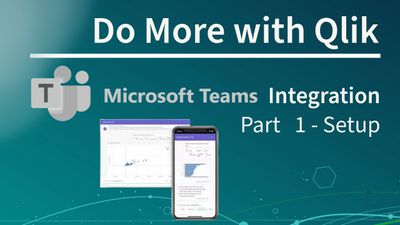
With the new Qlik Microsoft Teams app, you can easily chat with Insight Advisor, Qlik's intelligent AI assistant, to explore data using natural langua... Show MoreWith the new Qlik Microsoft Teams app, you can easily chat with Insight Advisor, Qlik's intelligent AI assistant, to explore data using natural language directly within MS Teams. Users can now ask questions through individual or group chat and Qlik will respond with AI-generated insights, using data from across your Qlik apps. And because it's Microsoft Teams, you can collaborate with others in real-time, collectively making decisions using the insights generated by Qlik. Insight Advisor within Teams provides a powerful new way to help more people find the right answers, make better decisions and collaborate together where and how they work. Check out part 1 of the 2 part series to see how to get started.
Can't see the video? YouTube blocked by your organization or region? Check it out here on the Qlik site.

-
Operationalizing Data Trust with Data Stewardship
Data now moves across teams, platforms, and AI-driven processes at a pace and scale that makes traditional passive governance insufficient. Ensuring d... Show MoreData now moves across teams, platforms, and AI-driven processes at a pace and scale that makes traditional passive governance insufficient. Ensuring data trust requires active validation by domain experts, structured accountability, and outcome-aligned remediation. We are announcing general availability of Data Stewardship in Qlik Talend Cloud (Premium and Enterprise) — a new capability designed to operationalize data trust.
So, why does data stewardship matter
Because in AI-driven environments – lack of data trust can quickly elevate the risks.
Take for example, a healthcare network uses AI to prioritize outreach to high-risk patients. The system flags thousands of records with missing allergy information, but it cannot act on what it means for the business. Are the allergies missing, or stored in another system? Is it safe to move forward with outreach, or should it pause until more information is gathered?A data steward reviews the situation, confirms the business impact, assigns ownership, and decides whether the data is safe to use. That human judgment keeps the AI workflow both responsible and reliable.
Data Stewardship in Qlik Talend Cloud accelerates governance initiatives, moving from passive to active and collaborative workflows — aligning business, data, and AI teams around a shared, trusted view of data.
Why you should use data stewardship in Qlik
Accelerate resolution with sprint-based workflows
Traditional governance processes are often ad hoc and reactive. Issues are discovered late, ownership is unclear, and remediation cycles stretch across weeks or months.
Data Stewardship introduces sprint-based workflows that replace fragmented processes with structured execution that is assigned, prioritized, tracked.
Clear ownership and SLAs bring accountability across domains. Instead of firefighting, teams move toward proactive stewardship — reducing remediation cycle times and improving transparency.
Standardize Trust with Pervasive Data Quality
Trust should not depend on isolated pure rule-based checks or tribal knowledge. Data stewardship makes data quality into a continuous, accountable practice. Instead of treating quality as a one-time check, embedded quality controls and observability signals continuously monitor, measure, and surface issues across the data lifecycle — driving proactive improvement rather than reactive fixes.
Bring domain experts into the trust loop
Automated systems are powerful — but they cannot infer business meaning on their own.
Data Stewardship brings business and data stewards directly into validation and remediation processes. Domain experts collaborate to validate flagged issues, assess business impact, apply domain-context specific remediation, and confirm resolution.
This human-in-the-loop model ensures that decisions reflect real-world business semantics — not just technical correctness. The result is higher reliability, stronger alignment, and more relevant data for downstream consumption including AI and agentic use-cases.
Run stewardship operations where data resides
Moving data across tools just to manage governance adds complexity and risk.
Data Stewardship operates directly where the data lives. By running stewardship workflows in place, organizations can avoid unnecessary data movement leveraging their existing data infrastructure (such as Snowflake), minimize operational overhead, and reduce security and compliance exposure.
Conclusion
Data quality and governance is a team effort, and data stewardship acts as the connective layer linking business users, data engineers, and AI teams. It creates clearer alignment, accelerates decision making, and strengthens organizational confidence — especially as business users drive data-powered initiatives and adopt AI. To learn more and get started, check out our documentation.
If you’d like to see Data Stewardship (and how it works with agents) in action or discuss practical data quality and governance use cases, join us at Qlik Connect 2026, taking place April 13–15, 2026 at the Gaylord Palms Resort & Convention Center in Kissimmee, Florida. This global customer event will bring together practitioners, product teams, and peers to explore real-world uses of data, analytics, and emerging capabilities.
-
Introducing Data Products for Analytics, now available!
Analytics only deliver value when insight is trusted. And trust comes from understanding the data behind it; where it came from, how it’s defined, and... Show MoreAnalytics only deliver value when insight is trusted. And trust comes from understanding the data behind it; where it came from, how it’s defined, and whether it’s fit for use.
Bringing trusted, AI-ready data products directly into Qlik Cloud Analytics
Data Products for Analytics are now available in Qlik Cloud Analytics Premium and Enterprise and Qlik Sense Enterprise.
With this release, you can turn your existing QVDs and datasets into governed, discoverable, and reusable data products, adding data quality, context, and ownership directly within your analytics environment.
What this brings:
- Stronger foundation for analytics and AI
- Turn trusted data into trusted insight
- Find and reuse trusted data, faster
Read more in our Innovation blog: Data Products for Analytics Now Available
And once you're ready to get started, here's what you'll need:
- What’s New in Qlik Cloud | Qlik Help
- Working with data products | Qlik Help
- Maximizing Data Value in the Age of AI | White Paper
- From Digital Swamp to Strategic Asset: Taming QVD Chaos with a Data Product Mindset | Blog
Thank you for choosing Qlik,
Qlik Support -
【新着レポート】Qlik、拡張データ品質ソリューションで 7 回目となるリーダーの 1 社に!
現在の AI 時代において、データ品質が重要なのはもちろん、必要不可欠でもあります。 AI 時代において、信頼性の高い AI 主導のインサイトの生成、信頼できる高品質のデータを使用したエージェンティック AI の強化が重視されています。こうしたニーズに低品質のデータを使用すると、AI 戦略の最初の... Show More現在の AI 時代において、データ品質が重要なのはもちろん、必要不可欠でもあります。 AI 時代において、信頼性の高い AI 主導のインサイトの生成、信頼できる高品質のデータを使用したエージェンティック AI の強化が重視されています。こうしたニーズに低品質のデータを使用すると、AI 戦略の最初の段階で失敗する可能性があります。
Gartner 社は、「2026年 Gartner® 拡張データ品質ソリューション Magic Quadrant」を発表しました。Gartner 社が評価した 13 社のデータ品質ベンダーの中で、Qlik は今回で 7 回目となるリーダーの 1 社に評価されました。
自社のビジネスニーズに最適なデータ品質ソリューションを選択するには?ぜひ、本レポートをご参考ください。
- Gartner 社によるデータ品質ソリューション市場に関するインサイト
- Qlik がリーダーの 1 社に評価された理由
- データ品質ソリューション市場における各メーカーの評価
- Gartner 社によるデータ品質ソリューション市場に関するインサイト
-
データ品質こそが エージェンティック AI のガードレールとなる(Qlik Blog 翻訳)
本ブログは "Data Quality Is the Guardrail for Agentic AI" の翻訳です。 著者:Matt Hayes AI が運用段階に入るにつれ、データ品質の重要性はかつてないほど高まっています。AI が単に成果物を出力する段階は過ぎ去りました。AI は実際のワーク... Show More本ブログは "Data Quality Is the Guardrail for Agentic AI" の翻訳です。
著者:Matt Hayes
AI が運用段階に入るにつれ、データ品質の重要性はかつてないほど高まっています。AI が単に成果物を出力する段階は過ぎ去りました。AI は実際のワークフローにおいて、開始、ルーティング、実行を担いつつあります。当社が最近発表したエージェンティック体験に対する市場の反響は、顧客・パートナー双方から非常に高く、あるパートナーは「まさに、これこそが AI に期待していた姿だ」と完璧に言い表しました。
この変化は刺激的であると同時に、リスクが急激に高まる領域でもあります。AI が行動を起こすようになると、「まあまあ良いデータ」ではもはや不十分になるのです。
その理由を実例で説明しましょう。顧客離反リスクを検知し、自動的に顧客維持ワークフローを起動する AI エージェントを想像してください。割引を提案し、担当者にケースを報告し、更新可能性の予測を最新にします。もし基盤となるアカウントデータが重複していたり、所有製品の情報が古かったり、契約ステータスが間違っていたりすると、エージェントは単に誤った洞察を生成するだけでなく、誤った行動を取ります、しかも大規模に。これが「まあまあ良いデータ」では不十分になる理由です。
AI は洞察から行動へ移行し、信頼が必須要件となる
市場は AI、生成 AI、エージェントによって加速しており、データ品質はその中心に位置します。なぜなら、信頼され管理されたデータこそが AI の取り組みを現実のものとするからです。レポートの中で特に印象に残った一節は、Gartner の戦略的予測「2027年までに、組織の 70% が AI 導入とデジタルビジネス戦略をより効果的に支援するため、最新のデータ品質ソリューションを採用する」です。これは単なる「ツールの流行」という一過性のものではなく、根本的なシフトが起きているという兆候なのです。
AI が運用段階に入ると、品質とガバナンスはもはや技術的選択肢ではなくなり、AI を大規模にかつ安全に展開できるかどうかを決定するガードレールとなるのです。
「拡張された」データ品質は単なる高速なクリーンアップではない
従来、データ品質は事後対応型のプロジェクトとして扱われてきました。データをプロファイリングし、クリーンアップし、次に進む。このモデルは機能しなくなります。なぜなら、エージェンティック AI の世界ではデータは静止しないからです。拡張されたデータ品質とは、活性化されたメタデータによって駆動される AI 強化機能を活用し、問題を早期に発見し、文脈に沿った修正を提案し、自動化可能な部分を自動化します。これにより、データが長期にわたり信頼性と実用性を維持できるのです。データ資産がハイブリッド化し、データソースが拡大し続け、AI システムが信頼できるデータを一時的ではなく継続的に必要とする状況において、これこそが積極的に求めるべきものなのです。
今年の Magic Quadrant は、AI 拡張に関する優先順位の明確な転換を示しています。もはや「あれば良い」ものではなく、成功に不可欠な要素となったのです。
エージェンティック時代において Qlik のアプローチが重要な理由
Qlik のパフォーマンスは、顧客が今まさに求めているもの、すなわちハイブリッド環境全体で品質とガバナンスを支えるメタデータ駆動型アプローチと一致していると考えます。自動化と AI 向け Qlik Trust Score により、AI 対応に向けたデータセットの適合性を評価する支援を実現しています。非構造化データの品質は今や中核要件であり、もはや新興トレンドではありません。これは当社がデータパイプラインに組み込み、買収と Qlik Answers® の導入を通じて拡大してきたものです。
エージェンティックなデータエンジニアリングプロジェクトを構築する場合、AI の基盤は重要です。それは次のような疑問への答えとなります。このエージェントが使用しているデータとその品質はどのようなものか、データの出所はどこか、適用されたルールは何か、何がいつ変更されたか、修正責任者は誰か。これが、デモは印象的だが実用化できない AI と、信頼できるデータに裏打ちされた説明責任を伴う実用化可能な AI との違いなのです。
詳細な洞察を得るにはレポートをダウンロードしてください(今年は興味深い動きもあります)。以下に私の要点をまとめます。
- まず、この分野では実行力が評価されます。データ品質がハイブリッド環境やマルチクラウド環境を毎日どこでもサポートし、大規模で確実に機能して初めて価値が生まれます。
- 次に、AI 強化機能はワークフローの中で自然に動作し、チームがルールと修正をより迅速に進めつつ、データスチュワードシップとガバナンスを適切に維持できるようにする必要があります。
- 最後に、データ品質は単発の導入ではなく継続的な運用モデルであるため、グローバルサポートと強力なパートナーエコシステムが予想以上に重要となります。単独のツールではもはや不十分です。
データとエージェンティック AI をさらに深く学びたい方は、4月 13日~15日にフロリダ州キシミーで開催される Qlik Connect へぜひご参加ください。実践的なセッションに加え、志を同じくする仲間や Qlik エキスパートとの交流の場もご用意しています。
Gartner, Magic Quadrant for Augmented Data Quality Solutions. Sue Waite, Divya Radhakrishnan, Amy Bickel, 11 February 2026.
GARTNER is a registered trademark and service mark of Gartner, Inc. and/or its affiliates in the U.S. and internationally, and MAGIC QUADRANT is a registered trademark of Gartner, Inc. and/or its affiliates and are used herein with permission. All rights reserved.
Gartner does not endorse any vendor, product or service depicted in its research publications, and does not advise technology users to select only those vendors with the highest ratings or other designation. Gartner research publications consist of the opinions of Gartner’s research organization and should not be construed as statements of fact. Gartner disclaims all warranties, expressed or implied, with respect to this research, including any warranties of merchantability or fitness for a particular purpose.