Unlock a world of possibilities! Login now and discover the exclusive benefits awaiting you.

Analytics & AI
Forums for Qlik Analytic solutions. Ask questions, join discussions, find solutions, and access documentation and resources.
Data Integration & Quality
Forums for Qlik Data Integration solutions. Ask questions, join discussions, find solutions, and access documentation and resources
Explore Qlik Gallery
Qlik Gallery is meant to encourage Qlikkies everywhere to share their progress – from a first Qlik app – to a favorite Qlik app – and everything in-between.
Qlik Community
Get started on Qlik Community, find How-To documents, and join general non-product related discussions.
Qlik Resources
Direct links to other resources within the Qlik ecosystem. We suggest you bookmark this page.
Qlik Academic Program
Qlik gives qualified university students, educators, and researchers free Qlik software and resources to prepare students for the data-driven workplace.
Recent Blog Posts
-
Freshdesk Dashboard
Freshdesk DashboardMicropinnacle Technology CorporationTicket Management Dashboard using Freshdesk as SourceDiscoveriesHow to handle resolution times ... Show MoreFreshdesk DashboardMicropinnacle Technology Corporation Ticket Management Dashboard using Freshdesk as Source
Discoveries
How to handle resolution times based on start and end date of a ticket. Fetch data from freshdesk using MSSQL
Impact
To monitor agents that has the highest resolution time and identify highly performing agents as well as underperforming agents
Audience
Business Analyst, ITSM
Data and advanced analytics
Monitoring Tickets
-
Analises de Compra e Venda
Analises de Compra e Venda Hyperscale Essa aplicação é um dashboard com o objetivo de monitorar o desempenho financeiro e operacional do posto d... Show MoreAnalises de Compra e VendaHyperscaleEssa aplicação é um dashboard com o objetivo de monitorar o desempenho financeiro e operacional do posto de combustíveis. Ela é usada por gestores, analistas e responsáveis pelos centros de custo (como loja e pista) para tomar decisões baseadas em dados. O que o app mostra: Volume total de etanol comercializado. Lucro líquido e seu comparativo ano a ano. Total de vendas e volume total em litros. Faturamento por funcionário e centro de custo, mostrando quem está performando melhor. Distribuição percentual do faturamento por funcionário, em formato de gráfico circular. Análise temporal do faturamento ao longo dos anos (2023–2025). Faturamento por categoria de produto, destacando quais linhas trazem mais receita (como combustíveis, cigarro, etc). Distribuição geográfica das vendas por estados brasileiros. Quem usa: Gestores de operações e finanças Supervisores de loja/pista Equipe comercial Diretoria da empresa Valor que está trazendo: Clareza sobre a performance por colaborador e categoria de produto. Identificação de quedas de faturamento, com destaque de variação ano a ano (YoY). Melhor tomada de decisão com base em dados reais e atualizados. Visibilidade de anomalias, caso presentes. Análise geográfica de mercado, que pode apoiar estratégias de expansão.Discoveries
Identificação dos colaboradores com maior contribuição para o faturamento. Detecção de uma queda significativa no volume e no faturamento em relação ao ano anterior. Compreensão de quais categorias de produtos são mais lucrativas, com destaque para combustíveis. A análise geográfica revelou uma concentração de vendas em determinadas regiões do Brasil, auxiliando na definição de estratégias mais direcionadas.
Impact
O aplicativo trouxe maior visibilidade sobre o desempenho operacional e financeiro do negócio, permitindo uma tomada de decisão mais ágil e embasada. Também contribuiu para identificar áreas e colaboradores com baixa performance, possibilitando ações corretivas mais rápidas.
Audience
O aplicativo é utilizado principalmente por gerentes operacionais, supervisores de pista e loja, além da equipe administrativa e diretoria da empresa. Ele é acessado diariamente para acompanhamento das vendas, desempenho por funcionário e análise financeira. A visualização é feita tanto em computadores nas salas de gestão quanto em dashboards projetados em TVs no escritório, sendo uma ferramenta essencial para o controle das metas e decisões rápidas.
Data and advanced analytics
O app integra dados de diferentes fontes (ERP, vendas e estoque) e aplica análises de performance, tendências e variações ano a ano. Isso possibilita a identificação de padrões, projeções de faturamento e apoio na definição de estratégias de marketing e operação.
-
Connector Factory – January and February 2025 releases
Qlik Cloud Analytics New! File Connector The File Connector for the Data Gateway provides a key capability to bridge on-premises file data to Qlik ... Show MoreQlik Cloud Analytics
New! File Connector
The File Connector for the Data Gateway provides a key capability to bridge on-premises file data to Qlik Cloud Analytics. This new connector can help on-premises analytic customers transition to cloud-based analytics as it enables them to easily access and leverage existing on-premises file data, especially QVDs, in Qlik Cloud Analytics. With familiar file access capabilities, the File Connector can also serve as a more robust replacement to the Qlik Data Transfer tool.
Customers can use the File Connector to access network drives and file systems via the Gateway server and can preview a file using read-only access to ensure data security. The File Connector can then load firewalled data files, of any currently supported file type, directly into Qlik Cloud.
The File Connector also utilizes predefined connection definitions for quick setup and supports wildcards when selecting files and folders.
Learn more here: Qlik Help: File Connector | SaaS in 60
New versions of Direct Access gateway
The Qlik Data Gateway - Direct Access allows Qlik Sense SaaS applications to securely access behind the firewall data, over a strictly outbound, encrypted, and mutually authenticated connection.
We recently released Direct Access gateway 1.7.0 and 1.71. 1.7.0 introduced the File Connector mentioned above and 1.7.1 includes the integration of a REST Connector via the gateway. It has the exact same capabilities as the REST Connector within Qlik Cloud, but it also provides access to sources based on REST APIs residing on-premises (behind a firewall). We recommend that you use this REST Connector instead of the Qlik Data Transfer tool.
New connectors for Qlik Answers
Qlik Answers knowledge bases now support Google Drive and OneDrive connections as data sources. You can find more information about creating knowledge bases here.
Qlik Talend
More capabilities in the Snowflake target connector
The Snowflake target connector for data replication and data pipelines now supports configuration of advanced (additional) ODBC and JDBC connection properties. This allows users to have fine-grained control over connection definitions beyond standard parameters, including adding properties such as Role, Secondary Role, and more.
You can find more information about these additional connection properties here.
Qlik Application Automation
New Connectors
Qlik Answers - This Qlik-native connector that enables the creation of data sources in knowledge bases using existing data connections. It also allows users to interact with assistants by asking questions related to the data source and receive answers based on the existing data. This blog discusses how to get started.
Updated Connectors
- Added media-files blocks to the Qlik Cloud Services & Qlik Platform Operations connectors.
- Added a Copy Data File block to the Qlik Cloud Services connector.
- Added input parameter to name the image generated in the Qlik chart image block.
- Updated Slack connector to redirect URL to point to Qlik.
- New and depreciated file-related blocks in the Slack Connector. You can read more about the changes here.
- Added CheckDataSource field to the Sendgrid connector.
-
The Growing Demand for Data Skills in the UK
Empowering Students through the Qlik Academic ProgramColleges and universities across the UK are responding by infusing data skills into their curricu... Show MoreEmpowering Students through the Qlik Academic Program
Colleges and universities across the UK are responding by infusing data skills into their curricula – and they’re not doing it alone. One community-driven initiative helping to bridge the gap is the Qlik Academic Program, which partners with universities to boost data literacy for free. Qlik, a global analytics company, offers free Qlik Sense cloud software licenses and a full suite of learning resources to university educators and students. This means students can get hands-on experience with industry-leading analytics tools beyond textbook theory. For example, at the University of Worcester, integrating Qlik into coursework let students go beyond theory to analyze real-world data and develop “workplace-ready skills” in data analysis and storytelling. The learning platform also includes a range of free courses covering data analytics and Qlik’s software, so students can learn at their own pace. As they progress, they can test their knowledge through exams and earn official badges and certificates. The qualifications offered by Qlik allow students to improve their marketability by demonstrating new data skills to future employers. In other words, passing these exams gives students concrete proof – in the form of digital certificates – that they are data literate, which can significantly boost their employability.Building a Data-Literate Community
The impact of such programs is already being felt. The Qlik Academic Program has teamed up with many UK universities – including the University of Sheffield, Liverpool, Birmingham and Worcester – creating a growing community of data-savvy graduates. Educators receive ready-made curricula and toolkits to seamlessly incorporate data analytics into classes, and students from all disciplines gain the confidence to work with data. In a job market where data literacy skills are in high demand and every sector is becoming data-centric, these collaborations ensure that the next generation enters the workforce ready to hit the ground running. It’s a true win-win: students enhance their career prospects, and industries get the data-literate talent they desperately need.Ready to boost your data skills or bring these opportunities to your campus? Learn more about the Qlik Academic Program on our website: https://qlik.com/academicprogram and join the movement to make the UK a data-literate nation. Every student with data literacy is one step closer to a future-proof career – and together we can close the skills gap, one data-informed graduate at a time.
-
Unlocking the Power of Apache Iceberg: The Future of Data Lakes
Why Apache Iceberg Should Be Your Organization’s Single Source of Truth Apache Iceberg is revolutionizing data lake architectures by providing a mode... Show MoreWhy Apache Iceberg Should Be Your Organization’s Single Source of Truth
Apache Iceberg is revolutionizing data lake architectures by providing a modern, open-table format that decouples storage from compute, enabling true data democratization. By leveraging Iceberg as your primary data lake/lakehouse, you eliminate vendor lock-in and gain full control over your data, ensuring cost-effective, scalable, and flexible data management.
The Medallion Architecture: Structuring Your Data Lakehouse
A data lakehouse is a modern data architecture that unifies the flexibility and scalability of data lakes with the performance and governance of data warehouses—delivering the best of both in a single, streamlined platform. A data lakehouse merges schema-on-read agility with ACID-compliant performance, enabling a unified architecture that supports both analytics and machine learning at scale.
Adopting the Medallion Architecture within an Apache Iceberg-powered data lake or lakehouse allows organizations to efficiently manage data as it progresses through different layers of refinement:
- Bronze Layer (Raw Data)
- All incoming data from various systems and sources is first ingested into the Iceberg lake.
- Acts as the single source of truth for raw data.
- Eliminates the need to first send raw data to a data warehouse, saving on expensive compute costs.
- Silver Layer (Refined Data)
- Data is cleaned, transformed, normalized, denormalized, flattened, and aggregated.
- Acts as a prepared layer for further analytical processes.
- Gold Layer (Business-Ready Data)
- Further refined datasets, tailored for business end-users and specific analytical use cases.
- Supports direct querying from BI tools, ML models, and data applications.
By structuring data within these layers inside Apache Iceberg, organizations avoid unnecessary data movement, reduce ETL/ELT complexities, and achieve significant cost savings.
True Data Democratization: Query Directly from Iceberg
One of the key advantages of Apache Iceberg is that business users and downstream systems can directly query Bronze, Silver, or Gold tables from the data lake/lakehouses, leveraging data stored in Cloud object stores. There is no need to move the data into separate vendor-controlled warehouses (e.g., Snowflake, Redshift) before analysis. This ensures:
- Open-format storage: Retain full ownership of your data without vendor lock-in.
- Seamless integration: Query Iceberg tables using engines like Trino, Spark, Dremio, Snowflake, Databricks or more…
- Scalability and cost efficiency: Process data at lake economics instead of expensive warehouse compute costs.
- Data products at the source: Build reusable data products directly from Iceberg tables.
Additional Use Cases for Apache Iceberg
Beyond structured data transformation, Apache Iceberg offers several other compelling use cases:
- Machine Learning & AI Pipelines
- Supports scalable and efficient feature engineering.
- Enables ML models to train on the latest datasets without unnecessary data movement.
- Real-Time Data Processing & Streaming
- Integrates with Apache Flink, Spark Streaming, and Kafka.
- Facilitates real-time analytics while maintaining ACID compliance.
- Data Versioning & Time Travel
- Enables querying past versions of datasets for audits and reproducibility.
- Enhances debugging and rollback capabilities.
- Multi-Cloud & Hybrid Data Architectures
- Consistent Data Access Across Cloud Providers: Apache Iceberg operates on open table formats stored in object storage (S3, ADLS, GCS), allowing seamless access across AWS, Azure, and Google Cloud.
- Decoupled Compute and Storage: Workloads can run using Apache Spark, Trino, Presto, Flink, and other query engines without being restricted to a single vendor’s or cloud provider’s analytics services.
- Cross-Cloud Data Analytics: Iceberg’s open-table format allows organizations to store data in one cloud (e.g., AWS S3) but process it in another (e.g., using Google BigQuery or Azure Synapse).
- Avoid Vendor Lock-in: Unlike cloud-native warehouses that tie data to their ecosystems, Iceberg enables an open and portable approach to data management.
- Regulatory Compliance & Governance
- Enables time travel queries, allowing organizations to query historical snapshots of data for audits and compliance checks.
- Integrates with Lake Formation and other catalogs to enforce fine-grained access control.
- Facilitates compliance with GDPR, HIPAA, and other data governance policies.
Transitioning from Traditional Data Warehouses to Apache Iceberg Lakehouses
Many organizations currently send all their data to cloud warehouses like Snowflake or Redshift, where the data transformation and refinement happen. While moving completely to an Iceberg-centric architecture isn’t always immediate, the transition can be strategically phased:
- For New Data Projects: Start by loading data directly into object stores with Iceberg instead of having to land it in warehouses.
- Minimize Warehouse Footprint:
- Instead of sending all data including raw (Bronze) and refined (Silver) data to the warehouse, prioritize utilizing data warehouse to process the Gold layer.
- Keep preprocessing within the data lake/lakehouse to leverage cost-effective Iceberg storage and compute.
- If occasional access to Bronze/Silver is needed, leverage warehouse catalog integration to query Iceberg tables directly.
- For Hive-Based Lakes: If you are using Hive as your existing data lake, start migrating new datasets to Iceberg.
- Gradually transition existing Hive tables to Iceberg with minimal downstream impact.
- Over time, modify pipelines to stop sending data to downstream systems and let them query Iceberg directly.
By strategically implementing these changes, organizations can progressively unbundle their data storage and compute from vendor-controlled architectures, lowering costs while enhancing data accessibility.
Visualizing the Transition to an Iceberg-Based Data Lake
To help illustrate the evolution of modern data architectures, we’ve outlined three key models that represent different stages in the journey from traditional data warehousing to a more flexible, scalable Iceberg-based data lake. These visualizations highlight how data flows from ingestion to consumption across each model, and how organizations can strategically transition toward a hybrid or fully Iceberg-native architecture.
Traditional Warehouse-Centric Architecture
Data Sources → Snowflake/Redshift → Transformation → Business Consumption
Apache Iceberg Medallion Architecture
Data Sources → Iceberg Lake (Bronze) → Transformation (Silver) → Business Data (Gold) → Query from Iceberg
Optimized Hybrid Approach (Transition Strategy)
Data Sources → Iceberg Lake (Bronze/Silver) → Gold (Sent to Snowflake/Redshift if needed) → Query Bronze/Silver from Iceberg
The Future: Apache Iceberg as the Default Standard
Organizations aiming for long-term scalability, cost-effectiveness, and data control could increasingly consider Apache Iceberg the default architecture for all new data projects. Iceberg enables true data ownership, open-format flexibility, and unbundling from vendor-controlled ecosystems, ensuring that organizations are prepared for the future of data.
With the growing trend of Data Products, Iceberg plays a crucial role in building high-quality, reusable data products directly from the lake without unnecessary duplication or vendor dependency.
By embracing Iceberg, businesses can realize the full potential of data lakes while optimizing costs and ensuring an open, scalable future for their data architecture.
Learn More:
Join us for Qlik Connect 2025, from May 13-15th for engaging sessions and in-depth insights on how to build using Apache Iceberg.
Here are some of the key sessions you don’t want to miss.
- Iceberg Ahead: Build an Open Lakehouse with Qlik Talend Cloud and Apache Iceberg
- Revolutionizing Iceberg Ingestion: Qlik Talend® and Upsolver in Action
- Workshop on Apache Iceberg: Unleash the Power of the Open Lakehouse Table Format
- Unleash the Power of Apache Iceberg: Building Your AI and Analytics platform with Qlik Cloud® on AWS
- Bronze Layer (Raw Data)
-
Cricket Game Predictor
Cricket Game PredictorPersonalThe Cricket Game Predictor app, built using Qlik Sense and Vizlib, is an interactive platform designed for cricket enthu... Show MoreCricket Game PredictorPersonalThe Cricket Game Predictor app, built using Qlik Sense and Vizlib, is an interactive platform designed for cricket enthusiasts to predict match outcomes and track their performance. The app features several sheets: Home, displaying team logos; Predict The Winner, with a Vizlib Writeback Table for submitting predictions to a QVD file; My Predictions, summarizing user predictions; Tournament Summary, showcasing KPIs like tournament winner, matches played, user prediction accuracy, top performers, points table, match results, and highest-bid players; Your Prediction Insights, highlighting correct predictions in green and incorrect ones in red; and Leaderboard, ranking users based on prediction accuracy and featuring graphs like top enthusiasts, most predicted matches, and top-performing departments. Additionally, the app includes a Disclaimer and Game Rules tab for transparency. Combining analytics and gamification, the app offers an engaging way to participate in cricket tournaments while gaining valuable insights.Discoveries
1. Identifying the most accurately predicted matches and teams. 2. Understanding user prediction trends and accuracy rates. 3. Recognizing top-performing users and departments in prediction accuracy. 4. Analyzing the correlation between user predictions and actual match outcomes. 5. Gaining insights into the most popular teams and players based on user engagement. 6. Tracking the overall prediction accuracy and its impact on leaderboard rankings.
Impact
Some of the discoveries from using this app include identifying trends in user predictions, understanding the most accurately predicted matches, and recognizing top-performing users and departments. The app has positively impacted the business by increasing user engagement through gamification and providing valuable insights into audience preferences
Audience
Everyone in the organization
Data and advanced analytics
This is for fun which increased user engagement through gamification during tournament.
-
Landing Your First Data Job: What Employers Really Want
So you’ve just graduated with a degree in data science, statistics, or a related field—and now you're stepping into the job market. The competition is... Show MoreSo you’ve just graduated with a degree in data science, statistics, or a related field—and now you're stepping into the job market. The competition is fierce, and while your academic background matters, it's often not enough on its own. Employers hiring for data roles are looking for something more than just a transcript. They want proof that you can do the work.Here’s what they’re really looking for—and how you can show them you're ready.
🎯 What Employers Are Actually Looking ForWhether you're applying for a data analyst, data scientist, or data engineer role, these are the top qualities employers want to see:1. Technical Proficiency in Core Tools2. Real-World Data Experience3. Analytical & Problem-Solving Mindset4. Communication Skills5. A Strong PortfolioThe Qlik Academic Program is designed to equip you with the skills and tools that today’s employers are looking for. With access to interactive video modules, quizzes, and ready-to-use lesson plans, you can build a strong foundation in data analytics at your own pace. You’ll also have the opportunity to earn qualifications and certifications that demonstrate your expertise and help you stand out in the job market. Best of all, you’ll receive free access to Qlik software for a full year—giving you the freedom to explore, practice, and apply what you’ve learned to real-world projects. Don’t miss out—sign up today and take advantage of everything the Qlik Academic Program has to offer. https://www.qlik.com/us/company/academic-programFinal ThoughtsThe data job market values proof over potential. While your degree lays the foundation, your projects, portfolio, and communication are what seal the deal. Show that you’ve gone beyond the classroom—solving real problems, using real tools, and sharing real insights—and you'll be exactly the kind of candidate hiring managers are hoping to find. -
Qlik Digest - April 2025
Exclusive Party at Disney's Animal Kingdom® Theme Park After 2+ days of best practices, workshops, and certifications, head over to our exclusive par... Show MoreExclusive Party at Disney's Animal Kingdom® Theme Park
After 2+ days of best practices, workshops, and certifications, head over to our exclusive party at Disney's Animal Kingdom® Theme Park for rides, food, drinks, and, of course, fun. Explore Expedition Everest®. Soar on a Banshee in the Avatar Flight of Passage® Adventure. Visit the Tree of Life®. Your all-access pass to Disney's Animal Kingdom® Theme Park awaits.
The future of data architecture is here
Transform your data strategy with our on-demand webinar, featuring insights on Iceberg-based lakehouses, cost-saving strategies, and an exclusive preview of Qlik Talend Cloud's innovative no-code Iceberg integration.
Experience a smarter way to learn
Qlik Cloud Analytics’ new Learn page offers step-by-step, outcome-based learning paths to help you succeed. From onboarding to advancing your skills, every step is designed for real results. Track your achievements, dive into fresh content, and gain the most from Qlik—all in one place.
Customer Stories
AriensCo Streamlines Its Data Environment by 83% To Deliver Long-Term, High-Quality Outcomes
Manufacturer accelerates critical developer output and frees up key staff to focus on adding value to the business.
Foodbank Victoria Benefits From Analysis and Reporting
Data-driven insights make charity’s food distribution more efficient and effective.
On-demand Webinars
Your fast track to AI success.
Don't let poor data quality force a detour on your AI journey. This webinar can help you navigate the six checkpoints to AI success.
Unlock the power of AutoML
Join industry experts as they demonstrate how the latest predictive AI features in Qlik AutoML® are revolutionizing business analytics.
-
Your Voice, Our Innovation: Qlik's Latest Updates
Qlik Cloud Analytics: Powered by Your Perspective 🚀 Analysis Creation Reimagined Start with more advanced visualizations, not charts. Select your a... Show MoreQlik Cloud Analytics: Powered by Your Perspective
🚀 Analysis Creation Reimagined
Start with more advanced visualizations, not charts. Select your analytical objective, and we'll build the visualization automatically.
- Choose what you want to discover, and we'll create the optimal visualization
- One click converts your analysis into a full chart with advanced editing capabilities
- Learn more about this analysis-first approach →
🎨 Customizable Navigation Experience
Take control of your app's navigation experience and actions:
- Context Menu Flexibility: Show only the options you need, hide or show menus to match your design vision
- Navigation Menu Makeover: Transform your app's visual journey with customizable text, backgrounds, borders, and shadows.
- Make it your own: Incorporate custom icons that speak your brand language
Are you a Qlik Developer? These updates are especially for you:
- Customize labels, fonts, colors, and emphasis styles to create a cohesive experience
- Define the style of apps using custom themes and create consistent branded experiences
⚡ Improved Performance
- Faster application loading with a more flexible computing process
- Real-time progress indicators keep you informed during app loading
- Less waiting, more analyzing, exactly as it should be
📊 Data Preparation Simplified
- Visual Data Flows: Transform complex data prep into intuitive visual experiences with drag-and-drop interfaces
- Self-Service Scheduling: Set up automated refreshes for apps, scripts, and data flows
- Preview data samples at every step of your transformation journey
🔍 Enhanced User Experience
- Public Chart Sharing: Monitor and Share with stakeholders updates reflecting source app reloads. Combine this feature with Custom Home to create a personalized landing experience.
- Customizable Data Downloads: Configure what data can be exported and how it appears when downloaded
- Smarter Toolbars: Access sheets and bookmarks directly from the toolbar for faster navigation
- Organized Activity Center: Dedicated "mini-homes" for visualizing, preparing, predicting, and automating
- A smoother start and continuous learning: Quickly access the right tools and content through guided "Learn" resources
Qlik Data Integration: Your Feedback in Action
🧠 Smarter Studio Experience
- Repository at Your Fingertips: Filter repository entries instantly using the new search field at the top of the Repository tree view
- Visual Workspace, Your Way: Choose between Simple or Rich color themes to match your workflow preferences
- Canvas That Flows with You: Navigate your design space more intuitively with improved canvas interactions
- Code With Confidence: Elevate your Java development with syntax highlighting, autocompletion, and intelligent editing tools
🎛️ Talend Management Console Reinvented
- One Unified Dashboard: Experience consistent design across all task types and plan details pages
- Seamless Security: Access your console more securely with enhanced SSO integration
⚡ Pipeline Power Unleashed
- Rock-Solid Reliability: Enjoy increased resiliency in gateway and cloud communications for uninterrupted workflows
- Insightful Monitoring: Optimize task execution with enhanced monitoring capabilities
- Enhanced Performance: Split tables by data ranges or partitions with parallel load functionality for improved processing
- Evolution-Ready Architecture: Automatically detect and control structural changes to your data sources with schema evolution
- Boundaryless Data Integration: Create cross-project pipelines where tasks consume outputs from other projects, enabling flexible organizational segmentation
- DevOps Mastery: Commit versions, track changes, and develop using branching strategies with GitHub integration and APIs for CI/CD automation
🔖 Improved Talend Documentation Experience
- Intuitive Homepage Navigation: Puts the information you need at your fingertips
- Better Structured Content: Find and leverage answers to your questions faster and easier
- Seamless Experience: Working links ensure smooth navigation throughout your documentation journey
- Real-Life Component Scenarios: Build efficient data integration pipelines using the latest technology with practical examples
Have questions about these updates? Reply to this post or check our detailed documentation.
@Marcus_Tannerfalk @Elisa_Sabot @Fanny_Bischoff
-
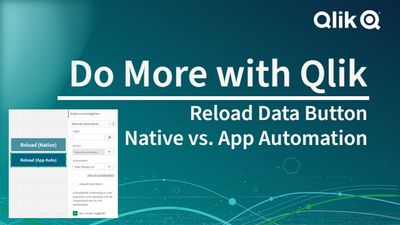
Button + Reload Data or Button + Execute App Automation - which do I use?
When creating Qlik Sense Apps - you can use a Button object and configure a variety of actions or navigation settings to it. One of those actions is ... Show MoreWhen creating Qlik Sense Apps - you can use a Button object and configure a variety of actions or navigation settings to it. One of those actions is the ability to Reload Data for the app you are in. This comes in handy during development, but also can be used where users require new data on demand.
However, when using the Reload Data action - other users may not be able to perform the reload action as they don't have ownership of the app or reload rights to the app / space the app is developed in. Here is an approach when using Qlik Cloud and Qlik Application Automation that can workaround that. This approach will also work for any App Automation that you want any user to execute.

-
Get to Know our Expert Instructors!
This month we would like you to meet Piter Harb. Piter is based out of London, England and is our Predictive Analytics with AutoML guru! 1. How long... Show MoreThis month we would like you to meet Piter Harb. Piter is based out of London, England and is our Predictive Analytics with AutoML guru!
1. How long have you been with Qlik?
Since May 2022, so coming up on three years now!
2. How did you become an instructor?
During my new hire internal training in a previous role some seven years ago, I asked the trainer if I could get up and try my hand at delivering a part of the course, just because it looked so fun. Two years later when this trainer left her post, she recommended me as her replacement, and I haven’t looked back since.
3. What do you love about teaching Qlik courses?
I love the software for a start. It’s very visually appealing. I love the variety of courses that we offer, and the fact that some of them are challenging enough to keep even the most technical students on their toes. Finally, I love that I can contribute towards course development and improvement.
4. How has the new platform helped you in leading your courses?
The new platform is a breeze to navigate and use. Everything feels well-organized and it is very easy for me and my students to find our courses.
5. What are your favorite features on the new platform?
I love how easily I can see and sign up to events such as live instructor webinars, and how easily I can find courses (self-paced or otherwise) on any feature I can think of.
{See Qlik Community Post for more information}
6. What is your favorite course to teach?
Predictive Analytics with Qlik AutoML. Not because I developed it, but because of its AI and Machine Learning content (which is very hot right now), including the variety of practical use cases with sample data from different industries. It might only be a 1-day course, but by the end of that day, business users will be able to predict future business outcomes and change them!
We hope you'll be on the lookout for one of Piter's Live Instructor Webinars and register to attend. We know you'll be in for an amazing experience!
Happy Learning!
-
Watch! Q&A with Qlik: New to Qlik Cloud
Don't miss our previous Q&A with Qlik! Pull up a chair and chat with our panel of experts to help you get the most out of your Qlik experience. Let ou... Show MoreDon't miss our previous Q&A with Qlik! Pull up a chair and chat with our panel of experts to help you get the most out of your Qlik experience.
Let our Qlik experts help you navigate and better understand how to get started finding data insights with Qlik Cloud.

-
Using Wildmatch to Build an Expression
Over a decade ago I wrote a blog post about conditional functions. One of the functions was wildmatch. This function does a string comparison and allo... Show MoreOver a decade ago I wrote a blog post about conditional functions. One of the functions was wildmatch. This function does a string comparison and allows the use of wildcard variables (? and *) in the comparison string. The question mark (?) matches a single character and the asterisk (*) matches a sequence of characters. I was reintroduced to the wildcard function by a colleague when I was trying to dynamically build an expression based on selections. In this blog post, I will share how I used the wildmatch function to dynamically build an expression.
I had a base expression that I wanted to expand if a selection was made in a field. The base expression looked like this:
In my app, I had a filter pane where the user could select none or as many of the list items they wanted. If no selections were made, then the base expression should be used. If selections were made, then I wanted to add additional metrics to the expression.For example, if Climber was selected, then the expression should look like the expression below. An extension of the base expression.I ran into a dilemma when I wanted to update the expression based on all list items that were selected because I would not know in advance which list items, if any, would be selected. A nested if statement was not an option because there are many possible combinations of selections that could be made. I tried various expressions, but none worked quite the way I liked. I reached out to a colleague (shout out to @Charles_Bannon) to get a different perspective, and he had an example of an expression that used the wildmatch to dynamically build an expression. We updated my base expression to look like this:Now, this looks like a lot but let’s first understand the first block of code and it will all make sense. I start with my base expression and then I add an if statement for each list item in the filter pane. Using GetFieldSelections, I capture any selections that were made in the Specialty filter pane. GetFieldSelections will return all selected list items separated by a comma. For example, if all list items were selected, it would return Climber, GC, One Day, Sprint, Time Trial. I then use the Wildmatch function with the asterisk to check for each specialty/list item. I used the asterisk because the list item could be anywhere in the string that the GetFieldSelections function returned. If WildMatch returns anything greater than 0 then it was found and therefore selected. In that case, I can add the respective expression to my base expression. If it was not selected, then I simply add 0. The same pattern is repeated throughout the expression. Each if statement checks to see if the list item was selected. If it was, add to the expression otherwise add 0.I chose to blog about the Wildmatch function again because this was not a function that I use or that comes to mind when trying to solve a problem. It was exactly what I needed to expand my expression as the user made selections. This will no longer be a function that I forgot about. 😊Thanks,Jennell -
【オンデマンド配信】データレイクハウス+リアルタイム統合の最前線 ~ Qlik + Upsolver がもたらすインパクト ~
Qlik + Upsolver で実現する次世代データ基盤は、データの複雑さを簡素化し、企業がデータの潜在能力を最大限に引き出せるよう支援します。これは、"リアルタイム"と"データレイクハウス"の融合を意味し、より深く幅広いデータ活用を可能にします。 本 Web セミナーでは、Upsolver の... Show MoreQlik + Upsolver で実現する次世代データ基盤は、データの複雑さを簡素化し、企業がデータの潜在能力を最大限に引き出せるよう支援します。これは、"リアルタイム"と"データレイクハウス"の融合を意味し、より深く幅広いデータ活用を可能にします。
本 Web セミナーでは、Upsolver の Apache Iceberg を活用したスキーマ進化対応のデータレイク管理機能と、Qlik のリアルタイムデータ統合 / 可視化の強みが一体化することで、どのようにモダンな分析基盤が構築できるのかを解説します。
Apache Iceberg とは何か? なぜ注目されているのか?
そして、Qlik が目指すリアルタイムデータ活用の進化とは?従来のデータウェアハウス中心の分析から脱却し、柔軟・リアルタイム・スケーラブルな次世代アーキテクチャに関心のある方に、必見の内容となっています。
※ 参加費無料。パソコン・タブレット・スマートフォンで、どこからでもご視聴いただけます。
-
Release Notes Updates and Introducing AudioEye!
Hello Qlik Community! Qlik Connect is only weeks away! Will we see you there? We’re thrilled to announce two enhancements that went live today! Rele... Show MoreHello Qlik Community!
Qlik Connect is only weeks away! Will we see you there?
We’re thrilled to announce two enhancements that went live today!
Release Notes on Select Forums
Access the latest Release Notes with ease on the following forums:
Introducing AudioEye
We’ve partnered with AudioEye to make our website more accessible and inclusive for everyone!
You’ll notice a small accessibility icon on the bottom corner of your screen.
What does AudioEye do?
AudioEye helps make our site easier to navigate for people of all abilities. It includes:
- Screen reader support
- Keyboard navigation enhancements
- Visual customization (like color contrast and font size)
- Real-time accessibility improvements
- Dyslexia-friendly and focus-enhancing options
Why we added this
Our goal is to make sure that everyone in our community can connect, participate, and enjoy the experience without barriers. Accessibility isn’t just a feature — it’s a priority.
Also, we fixed an issue on the Contact Support page where it was taking two click to kick off the ‘Critical Issue’ workflow.
What are your thoughts? We’d love to hear your feedback—especially about AudioEye! Drop your comments below and let us know what you think.
We’re looking forward to seeing you all in just a couple of weeks at Qlik Connect!
Your Qlik Community Admins,
Melissa, Sue, Jamie, Nicole, Tammy and Caleb
@Melissa_Potvin @Sue_Macaluso @Jamie_Gregory @nicole_ulloa @Tammy_Milsom @calebjlee
-
Welcome to Dr. Terrence Perera – New Qlik Educator Ambassador for 2025!
Originally trained in Mechanical Engineering, Terrence’s academic journey took a turn toward management early on. He completed his PhD in Operations M... Show MoreOriginally trained in Mechanical Engineering, Terrence’s academic journey took a turn toward management early on. He completed his PhD in Operations Management at the University of Strathclyde, Glasgow, and has since dedicated his teaching, research, and consultancy to computer simulation, operations management, supply chain management, and—most recently—business analytics.
Terrence currently leads two core modules at the University of Sheffield: The Intelligent Organisation (MBA) and Business Intelligence (BA). His mission is clear and forward-thinking: to equip management students with the analytics skills they need to thrive in today’s data-driven business world. “In today’s business world, managers cannot perform their roles effectively without understanding how to leverage data to make better decisions,” he emphasizes.
Terrence began using Qlik in his teaching in 2020, first incorporating it into the Business Intelligence module, and gradually expanding it into the MBA curriculum. He was inspired to start using Qlik after seeing a colleague use it and quickly recognized the intuitive nature of its dashboard creation process. “I was particularly drawn to Qlik’s logical sequence for creating dashboards. It makes it easy to explain the entire journey, from loading data to building a fully functional dashboard,” he explains.
In his undergraduate course, students participate in a series of hands-on workshops where they build dashboards and develop vital storytelling skills—an approach that not only deepens their learning but also sharpens their employability. "Students have definitely acknowledged that learning Qlik has enhanced their employability skills" Terrence notes.
Looking ahead to 2025, Terrence is excited to develop real-world scenarios in HR, supply chain, and customer analytics, aiming to enrich his classroom sessions with even more practical relevance. “I aim to develop specific scenarios for HR, supply chain, and customer analytics and integrate them into hands-on sessions. Additionally, I plan to expand the use of Qlik in the MBA module,” he shares.
As an Educator Ambassador, Terrence hopes to amplify Qlik’s presence in business schools and share his experiences internationally, especially in Southeast Asia. He believes management education is still playing catch-up when it comes to embedding analytics in mainstream curricula, but change is on the horizon. “I believe business/management schools have been slow to embed analytics into popular courses such as Business Management and MBA programmes. However, I expect this to change over time. I strongly believe analytics should be a core module in management education,” he asserts.
When he’s not championing analytics in the classroom, Terrence enjoys the peaceful beauty of Sheffield, nestled near the Peak District, where he loves going for walks. Originally from Sri Lanka, he keeps his heritage alive through a unique hobby: karaoke in Sinhala! A passionate songwriter, he has penned over 25 songs—one of which he has even recorded.
We’re thrilled to welcome Terrence Perera to the Educator Ambassador community this year. His passion for transforming management education through data and storytelling will undoubtedly inspire students and educators alike.
👉 For more information about our Ambassador Program, visit: qlik.com/us/company/academic-program/ambassadors
👉 For more information about our Academic Program, visit: qlik.com/academicprogram -
重要な価値を提供する: クレマンソー医療センター病院におけるアナリティクス成熟への道(Qlik Blog 翻訳)
本ブログは Delivering Value That Matters: The Path to Analytics Maturity at Clemenceau Medical Center Hospital の翻訳です。 著者:Muzammil Khalil 当院では、患者に最高水準の医療... Show More本ブログは Delivering Value That Matters: The Path to Analytics Maturity at Clemenceau Medical Center Hospital の翻訳です。
当院では、患者に最高水準の医療を提供することが最大の目的です。この目標を達成するためには試練があり、特にコロナ時には不可欠であった正確でタイムリーな情報を継続的にやりとりする必要がありました。世界的な健康危機の過程で、CMC 病院は、適切な医療プロセスに従いながら、シームレスなデータフローを確保するという大きな課題に直面していました。
私は 2020年の開院以来、この病院に重要な役割を果たしてきました。シニア・プログラム・マネージャー(デジタルトランスフォーメーション、アナリティクス、人工知能担当)として、私は CMC を変革し、今後も変革し続ける戦略的デジタルイニシアティブを監督しています。私の主な責務は、データ戦略が病院の現在および将来の運営上の要件を満たすようにすることです。
データの断片化と業務の非効率
パンデミック発生時に病院が再開されたとき、このような急激な変化が起こるとは誰も予想していませんでした。当時、私たちの最優先事項は、コロナ患者に即座に対応し、重要なケアを提供するために十分な数の医師、看護師、薬剤、人工呼吸器を用意することでした。
その頃、CEO から毎日開催されるの報告会に参加するよう要請され、データの断片化と複雑さが最も大きな課題であることを知りました。各部門の責任者が報告書を発表するのですが、ある部門は前日にX人の患者を治療したと報告すると、別の部門はY人と報告するなど、矛盾したデータがあることに即座に気づいたのです。これは、各部門の責任者が複数のシステムでバラバラのデータソースを使用していたため、支離滅裂な情報が提供され、パンデミックのような重要な時に意思決定の遅れをもたらしていたのです。
バラバラのシステムからの情報を統合しようとエクセルを使って手作業で報告書を作成したため、業務の非効率化を招きスタッフの貴重な時間が毎日浪費されていました。このやり方により、患者のケアや資源の配分をサポートする重要な意思決定が遅れる結果となっていました。
データ主導の施設として、医療業界の他の人々と同じような課題がありました。それは、コストの上昇、限られた収益、高まる患者の期待に応えることでした。不測の事態を考慮する中で、医療セクター内のすべての人が、有能な医療専門家に対する持続的な需要と同時に、支出を最適化しなければならないという大きなプレッシャーに見舞われました。私たちにとって、新たなデータセキュリティ基準を遵守すると同時に、クライアントに最高品質の医療を提供するために最新の技術的進歩を取り入れることが不可欠でした。
チームミーティングの後、CEO から、すべてのチームメンバーと部門間の連携を確保するために、早急に導入できる費用対効果の高いソリューションを検討し、選定するよう要請されました。
ユーザーフレンドリーで費用対効果の高いオンプレミスのソリューション
適切なアナリティクスソリューションを探すにあたり、技術要件と可用性、プロジェクトのデリバリーとサポート、デモンストレーションなどの要素に同等の重要性を割り当て、評価スコアを慎重に検討しました。
Qlik、Tableau、Power BI、Infor Birst を評価し、最終的に Qlik に決定しました。
Qlik は13年連続(当時、現在は14年連続)でガートナー社のマーケットリーダーの1社としての地位を一貫して維持していました。デモを通じて、参加者は Qlikのインターフェースに満足していることを表明しました。Qlik がオンプレミスのソリューションを提供していることに加え、その堅牢な技術的機能、安全プロトコル、セキュリティ機能を高く評価しています。アラブ首長国連邦では、国境を越えた患者データのローカライゼーションに関する規制を遵守することが不可欠です。Tableau や Power BI など、Gartner のリストでリーダーとして認識されている様々なソリューションは、魅力的な機能を提供していますが、費用対効果の高いオンプレミスのソリューションという当社の明確な要件を満たすことはできませんでした。逆に、Qlik はローカルでデータを管理するために必要なツールを提供してくれました。さらに、当病院のデータセンターでは複数のシステムを運用しているため、クラウドベースのソリューションを採用すると、データの更新間隔が大幅に長くなり、数時間に及ぶ可能性があるという懸念があることも重要です。
費用は、評価プロセスにおいて重要な要素でした。Infor Birst が提供するライセンスモデルは、ERP のダッシュボードとしては一般的に許容範囲内であることがわかりました。しかし、他のシステムからのデータを使ってダッシュボードを作成するための費用は、かなり高額でした。さらに、Tableau と Power BI のどちらを利用するにしても、オンプレミスのサーバーを維持するために必要な金銭的な負担は大きかったのです。
Qlik の主な利点は、その製品の高度な成熟度にあります。多様なデータベースとのシームレスな統合に必要な機能をすべて網羅しています。私は Qlik を利用したことはありませんでしたが、基本的なコンセプトは他のビジネスインテリジェンスツールに匹敵するものであり、Qlik の学習サイトで利用できるリソースを活用することで、知識を深め、最終的にデータアーキテクチャの認定を取得することができました。
結論として、Qlik はプリセールスの段階から導入、そしてその後のプロセスに至るまで、非常に協力的であることがわかりました。Qlik のソリューションアーキテクトは、技術的なガイダンスが必要なときにはいつでも貴重な支援をしてくれました。
長期的なデータ戦略の構築
技術的ソリューションの探求は、技術そのものが要件を規定するのではなく、目の前のニーズとユースケースによって推進されるべきだというのが、私の確固たる信念です。この原則は、導入プロセスを通じて私たちの基本的な指針として機能しました。私たちの主な目的は、複雑なデータセットを実用的な洞察に変換し、それによって意思決定プロセス、業務効率、そして最終的な患者の治療成果を改善することでした。
私たちは、病院の包括的で段階的なデータ戦略の開発に着手し、業務上のニーズとの整合性を確保するために、各部門の責任者から積極的に意見を求めました。この戦略的枠組みは導入段階、特に限られた財源と限られた労働力しかなかったパンデミックのピーク時期において、サポートしてくれました。
技術的な観点では、様々なベンダーが提供するデータベースやデータ辞書へのアクセスを確保することが主な課題でした。その結果、現在 Qlik に統合・統合されている 10種類のアプリケーションの接続に成功しました。その後、当院で使用されている各用語を正確に定義するために、ビジネス用語集と連動した包括的なデータ辞書を作成しました。この取り組み以前は、臨床部門と財務部門などの間で、患者の来院に関する解釈に食い違いがありました。これらの定義を標準化することで、以前の矛盾をなくし、組織内の全体的な明快さとコミュニケーションを強化することができました。
トレーニングとユーザーへの導入の段階では、幹部と部門長にフォーカスしました。なぜならこの人々は主要業績評価指標(KPI)を最も包括的に理解しているからです。
このイニシアチブは、患者数や収益指標など、病院運営の戦略的概要を提供するエグゼクティブダッシュボードの導入から開始しました。その後、各部門と連携し、各部門固有のニーズを把握することで、各部門にカスタマイズした最適なダッシュボードを開発することができました。
戦略的な拡大努力により、私たちは日常的に Qlik を使用し、合計 30の包括的なダッシュボードで最大 200の明確に定義された KPI に注力するユーザーを増やことに成功しました。
正確性、適時性、効率性というメリットを享受
Qlik を導入して以来、病院全体の業務効率が著しく向上しました。エクセルのスプレッドシートと手作業によるレポート作成は、ダッシュボードに完全に取って代わられました。このダッシュボードは、唯一無二の情報源としての地位を確立しています。ダッシュボードは、すべてのチームメンバーの連携と情報提供を確実にするという CEO の目的を効果的に果たしています。
自動化されたレポーティングによって、大幅な時間の節約、プロセスの最適化、意思決定の強化が可能になり、そのことに組織内の各人が感謝の意を表明しています。以前はエクセルからレポートを作成するのに 3~4時間かかっていた財務部のメンバーは、今ではその時間とリソースを複雑な代替案分析の開発に振り向けることができるようになりました。
さらに、私たちのリーダーシップチームは、レポート作成においてますます自立的になり、独自のダッシュボードを通じて多様な視点からデータにアクセスし、分析できるようになりました。同時に、医療記録部門では、医療規制当局が要求するデータ収集のために複数のベンダーとやり取りする必要がなくなり、業務が効率化されました。これらの情報は Qlik に自動的に統合され、シームレスにレポートを作成できるようになったからです。
Qlik を導入したことで、投資に対する大きなリターンを実感しています。しかし、この指標を定量化することは、私たちの組織にとって難しい課題です。Qlik の財務的な面へのメリットは、直接的な収益よりもむしろコスト削減によって認識されています。Qlik が提供する業務効率化と戦略的洞察は、事務スタッフの大幅な時間短縮を可能にしただけでなく、病院の指導者が情報過多を陥ることを防いでくれています。
正確でタイムリーな情報が得られることで、意思決定能力が大幅に向上しました。リアルタイムダッシュボードの導入により、プロアクティブな意思決定が容易になり、ミスの可能性が減少し、リソースの配分が最適化されました。例えば、当病院の薬剤部では、病院の全フロアにわたって薬剤の在庫レベルを入念に監視し、このデータを活用して効率的な調剤と薬剤の調達を行っています。
データ変革の旅を始めるためのアドバイス
データ変革の旅に出ようとしている方々に対して、私は2つの提言します。
一つ目は、プロセスを小規模で開始し、その後段階的に拡大し、達成可能な目標に集中して利害関係者の支持を確保することです。ダッシュボードを設計し、表示される情報の正確性を検証するために、関連するビジネスユニットと協力しながら、1つのユースケースと5人のユーザー集団から始めるとよいでしょう。さらに、このような段階的なステップを踏んで次のビジネスユニットと関わりを持つことで、結束力を維持し、戦略的な考え方を取り入れ、達成可能な小さな成功に優先順位をつけることで、組織内でのこれらの技術的進歩の長期的な採用を促進するのです。
二つ目は、投資対効果を最適化するためには、戦略的整合性とユーザーとのエンゲージメントを優先することが不可欠だということです。チームの原動力となる短期的目標と長期的目標の両方を、チームの願望や懸念も含めて包括的に理解することが極めて重要です。チームメンバーが、テクノロジーによって職を奪われるかもしれないという不安を抱いている場合、新しいソリューションの導入に抵抗を示す可能性が高いいです。したがって、データイニシアチブを成功させるための環境を醸成するために、安心感を与え、サポートすることが不可欠です。
私たちはこれまでかなりの進歩を遂げてきましたが、それでもなお、さらなる努力が必要です。Qlik はクレマンソー病院のデータ環境を一変させただけでなく、将来の人工知能ベースのソリューションに向けた継続的なイノベーションの基盤を確立してくれたのです。
-
Building a brighter future through data skills in Latin America
Across Latin America, the need for data skills is growing faster than ever. A recent World Economic Forum article shows that 84% of employers are step... Show MoreAcross Latin America, the need for data skills is growing faster than ever. A recent World Economic Forum article shows that 84% of employers are stepping up to train their teams, knowing that the future will be shaped by AI, big data, and digital technologies. But the challenge is big: many leaders also say we need more public support to help people gain the skills they need to succeed.
Today, learning data analysis, critical thinking, and digital literacy is essential to thrive in a world that is changing every day. Without action, the digital gap in Latin America could grow even wider, making it harder for people and businesses to compete on the global stage.
That is where the Qlik Academic Program comes in. Qlik is offering students and educators free access to powerful data analytics software, self-paced online courses, and valuable certifications. Whether you are a student getting ready to launch your career or a professor helping to prepare the next generation of leaders, these resources give you the tools to turn information into action and dreams into opportunities.
Are you ready to start your journey with data?
Explore how you can access these free resources at www.qlik.com/academicprogram.Reference: The Future of Jobs in Latin America and the Caribbean – World Economic Forum
-
Discover Newly Released Courses on Qlik Learning
Accessing the What’s New page: 1. Log into Qlik Learning with your Qlik Account. 2. Click the Topics menu and then choose What’s New. 3. On the n... Show MoreAccessing the What’s New page:
1. Log into Qlik Learning with your Qlik Account.
2. Click the Topics menu and then choose What’s New.
3. On the next screen, click the What’s new topic. Here, you can also choose to follow this page by clicking the green Follow button. Doing so places the page information onto your Qlik Learning home page.
4. On the next page, you will first see blocks containing information on our newest courses and recently updated ones. For example, this quarter, our new courses include Qlik Cloud Data Preparation Essentials, Qlik Application Automation Foundations, and Qlik Answers Foundations.
While here, we recommend looking at this highlighted course: Qlik Answers Foundations. This course provides information on how to set up and use Qlik Answers, how to deploy and administer Qlik Answers, and how to integrate it with other tools. Qlik Answers is a plug-and-play, generative AI-powered knowledge assistant that provides business users with personalized, contextually relevant answers to questions sourced from unstructured content.
5. Release notes highlight the specific changes we have incorporated into the new or updated courses listed.
Questions? Reach out to us at education@qlik.com. Happy Learning!
-
Watch Q&A with Qlik: Stitch Migration to Qlik Talend Cloud
Don't miss our previous Q&A with Qlik! Pull up a chair and chat with our panel of experts to help you get the most out of your Qlik experience. ... Show MoreDon't miss our previous Q&A with Qlik! Pull up a chair and chat with our panel of experts to help you get the most out of your Qlik experience.